Q: What does a hex crimp actually do?
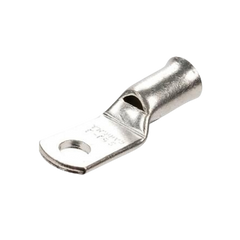
A hex crimp squeezes a round copper lug into a six-sided shape with matched dies, forcing the lug's inner wall to flow around the cable strands. Done right, the lug and cable become one piece of copper with no air gaps, and the connection carries the same current as the cable itself. A loose or oval crimp heats up under load and eventually fails.
Q: When should I pick a mechanical hex crimper over a hydraulic one?
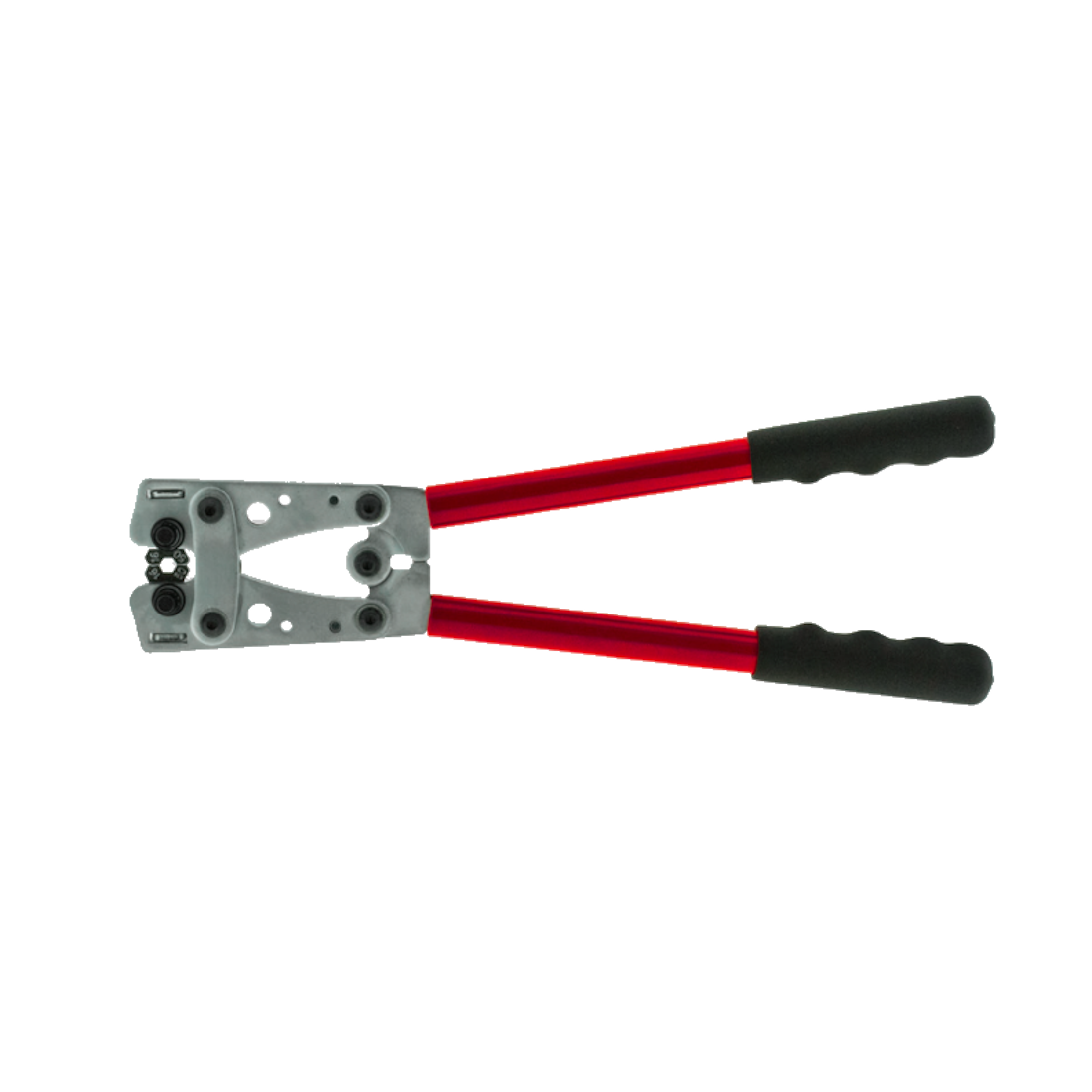
A mechanical crimper like this one works for lugs up to 50mm² in cables you can hold still with one hand. It takes one squeeze per crimp and needs no cord, battery or hand-pump stroke. For lugs 50mm² and above, or heavy cable where a 50mm² crimp needs serious force, step up to the 6-70mm² hydraulic version. It carries 8 tonnes of pressure through a hand-pump ram instead of lever leverage. [hydrualic-lug-crimper-up-to-70mm2]
Q: Which die do I use for which lug size?
Match the die size exactly to the lug's bare copper barrel size, not the cable size or the stud size. A 50mm² lug uses the 50mm² die; a 25mm² lug uses the 25mm² die. The revolving die head rotates between 6, 10, 16, 25, 35 and 50mm² positions and locks into place with a notched detent. If the die is too big the crimp will be loose; too small and the die won't close over the lug.
Q: Can I use this on aluminium or lead lugs?
No. Hex dies are shaped for copper, which flows into a solid hexagonal shape under the die's pressure. Aluminium work-hardens and cracks under hex pressure, and lead is too soft to hold shape; both end up with cold or deformed crimps that fail under load. Stick to copper lugs on this tool. Aluminium cable work needs an indent-style die set rated for aluminium.
Q: How does this compare to the hydraulic version?
The hydraulic version carries bigger cable (up to 70mm²) with 8 tonnes of ram pressure and ships with 7 interchangeable dies in a carry case. It's the right tool for inverter mains, winch feeds, DC-DC input runs and welding cable where lug sizes jump above 50mm². This mechanical version handles 6-50mm² with one squeeze per crimp, no hand-pump stroke needed, and tucks into a standard tool drawer at 1.7kg instead of 3.1kg. Pick mechanical for auxiliary battery leads and solar runs; pick hydraulic when the lugs get bigger than 50mm². [hydrualic-lug-crimper-up-to-70mm2]
Q: What size lugs is this good for?
This tool spans the whole 4WD and caravan auxiliary wiring range, from 6mm² small-gauge auxiliaries up to 50mm² house battery and dual-battery connector feeds. Above 50mm², move to the hydraulic version for inverter mains and winch feeds. Below 6mm², a smaller ratchet crimper handles up to 16mm² lugs more comfortably with less bulk. [crimping-tool-uninsulated-and-copper-cable-lugs-6-16mm2]
Q: Why does my crimp feel loose?
Three usual causes. First, wrong die; the die must match the lug exactly, not approximately. Second, the handle wasn't squeezed through its full stroke; the over-centre toggle only latches when the handles bottom out and release with a click. Third, the lug and cable disagree; a 25mm² cable in a 35mm² lug will never fill the barrel, and no amount of crimping will fix that. Check die, stroke, then cable-to-lug match in that order.
Q: The die won't rotate — what do I do?
The revolving die head only turns when the handles are fully open and the toggle is relaxed. Pump the handles once to confirm they're at rest, then rotate the die with firm thumb pressure. If a lug is still sitting in the die, drop it out before rotating; the die won't index with anything in the jaws.
Q: When should I use the smaller 6-16mm² ratchet crimper instead?
For small-gauge auxiliary wiring (fridges, USB outlets, LED light bars, low-current switches) the 6-16mm² ratchet crimper is faster. A single pull of the ratchet handle produces a controlled crimp without lever leverage, and it fits into tighter spots on a dash loom. Use this hex crimper for anything above 16mm² or where the lug barrel is thick enough to need the extra leverage. [crimping-tool-uninsulated-and-copper-cable-lugs-6-16mm2]
Q: Should I use heat shrink after crimping?
Yes. Adhesive-lined heat shrink over the barrel of the lug stops moisture creeping into the strand bundle, seals the copper from salt and dust, and strain-relieves the cable where it enters the lug. On exposed engine-bay or caravan install work it's not optional. Clear or black 3-to-1 shrink that covers the whole barrel and 10mm of cable on either side does the job.