EA-Logo-RGB-Master_Yellow-Dark-Grey-Black


Currency

Cart 0

SIGN UP FOR $10 OFF YOUR FIRST ORDER

Sorry, looks like we don't have enough of this product.

Pair with
Estimate shipping
Add order notes
Is this a gift?
Subtotal Free
View cart
Shipping, taxes, and discount codes are calculated at checkout

Your Cart is Empty

Home / Lighting / Driving & light bars
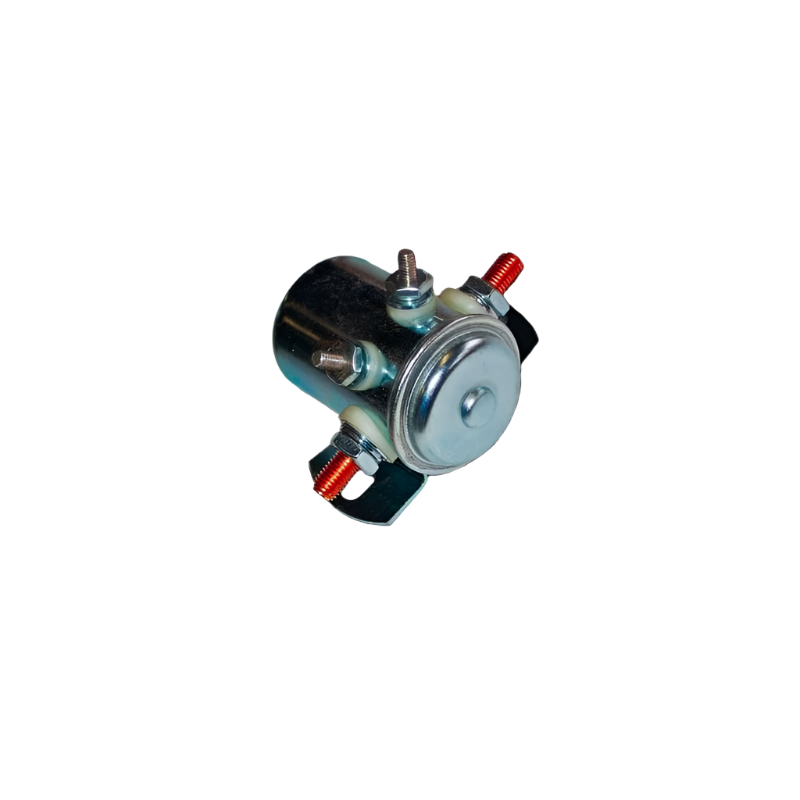
Continuous duty solenoid for 12V DC switching. Zinc-plated cylindrical steel body on a two-hole mounting bracket with two large insulated main studs for the 100A power side and two smaller coil terminals on the end face.

Elevate Automotive

Continuous Duty Solenoid — 100A 12V SPST

ACX3322

100A continuous duty contactor for 12V DC switching of dual battery feeds, auxiliary loads, fridge isolation circuits and winch idle feeds. SPST normally open, isolated coil, zinc-plated steel body on a two-hole mounting bracket.

Continuous 100A
Peak 400A
12V DC coil

$55.00

4 interest-free payments of $13.75 with
or finance your build with
We accept
Universal fitmentContinuous duty solenoid for 12V DC switching of dual battery, auxiliary and isolation circuits

Shipping & collection

Worldwide shipping available*
In-store pickup
Professional installation available

*Shipping is calculated at checkout based on your location. Some products can't be delivered to every address.

A continuous duty contactor that stays closed under high current for as long as the coil is energised. Switches 100A at 12V DC through two heavy studs, with a small two-terminal coil pair driven from an ignition feed or switch. Fits dual battery setups, auxiliary circuits, winch idle isolation feeds, hard-wired fridge switching and permanent fan or pump loads that live for hours at a time.

The body is zinc-plated steel on a two-hole mounting bracket, with two large insulated main studs for the power side and two smaller screw terminals on the end face for the coil. Overall footprint is 85 by 50mm and 75mm tall at the stud tips. Peak surge draw sits around 400A for a few seconds, which covers inrush on fridges, winches and inductive loads without welding the contacts.

Fuse the main feed within 300mm of the battery at a value matched to the downstream circuit, never above the 100A continuous rating. The coil draws a small continuous current while energised, so wire the switch leg through an ignition-switched source rather than a permanent live if the vehicle sits unused for weeks.

You'll also need
  • Continuous Duty — stays closed for hours without heating
  • 100A Rating — covers fridge, pump and auxiliary loads
  • 400A Surge — absorbs inrush from winches and inductive loads
  • Isolated Coil — dedicated coil terminals for ignition-switched drive
  • Zinc-Plated Body — holds up in engine bay and under-chassis locations
  • Two-Hole Bracket — bolts to firewall, bulkhead or chassis rail
  • Studded Main Terminals — ring-lug straight to battery and load

Electrical

Continuous Rating | 100A

Peak / Surge | 400A (10 sec)

Operating Voltage | 12V DC

Coil Draw | 0.5A

Configuration | SPST N/O

Coil Type | Isolated (2-terminal)

Operating Temp | -40 to +85°C

Physical

Housing | Zinc-plated steel

Dimensions | 85 × 50 × 75mm

Mounting | 2-hole, 60mm centres

Main Terminals | 2× stud (M8)

Coil Terminals | 2× screw

Weight | 0.46 kg

Length: 85mm

Width: 50mm

Height: 75mm

Weight: 0.46kg

Continuous duty solenoid for 12V DC switching of dual battery, auxiliary and isolation circuits
12V DC systems — 4WDs, caravans, trucks, boats, trailers
Dual battery setups (ignition-switched or VSR-driven isolation)
Hard-wired fridge, pump, fan or auxiliary light feeds
Not for 24V systems — 12V coil will burn out on a 24V feed
Not a winch controller — use a dedicated reversing winch contactor for in/out control
Not a starter solenoid — intermittent-duty starter solenoids are not interchangeable

Q: What does continuous duty actually mean?
It means the contactor can stay closed indefinitely while the coil is energised, without overheating or welding the contacts shut. A starter solenoid is intermittent duty, only rated to be closed for a few seconds at a time, which is why using one for a fridge isolator or auxiliary feed burns it out.

Q: What is the difference between a solenoid and a relay?
Mechanically the same thing, an electromagnetic coil pulling a plunger to close a set of contacts. The industry uses solenoid for high-current contactors (around 60A and up, with stud terminals) and relay for lower-current switches (around 40A and under, with blade terminals). This is a 100A solenoid.

Q: What does SPST isolated coil mean?
SPST is Single Pole Single Throw, so one input and one output with a single on/off action. Isolated coil means the coil has its own two-terminal pair rather than sharing a ground path with the main power circuit, so the switch leg can be driven from any 12V signal source.

Q: Can I use this as a winch controller?
No. Winch control uses two momentary contactors wired for reverse polarity to run the drum in both directions, and winches draw 200 to 500A under load so you need a dedicated winch contactor rated for that current. This 100A unit works fine as the main isolation feed between the battery and the winch controller, but it does not replace the controller itself.

Q: Can this run a dual battery setup?
Yes, as a basic ignition-switched isolator. Wire the coil to an ignition-live source and the solenoid closes when the engine runs (charging the auxiliary battery off the alternator) and opens when it stops (isolating the auxiliary so it cannot drain the starter). For automatic voltage sensing without ignition wiring, pair it with a VSR module driving the coil.

Q: What size cable do I need on the main terminals?
Size the cable to the actual load, not to the 100A solenoid rating. A 40A fridge circuit runs on 6mm²; a 60A auxiliary load wants 10mm²; getting close to the full 100A rating needs 16mm² or heavier on short runs. Oversize the cable rather than the fuse.

Q: Does the coil draw current while energised?
Yes, around 0.5A continuous while the contactor is closed. That is roughly 6Ah per 12-hour day, so if the circuit stays on with the engine off (such as a hard-wired fridge isolator) either run the coil off ignition-switched power or add a timer to drop it out when the vehicle sits unused.

Q: What is the peak current rating for?
Around 400A for a few seconds. That covers inrush when a fridge compressor starts, a pump kicks in or a winch takes a load, without welding the contacts. Continuous flow has to stay at or below the 100A rating, though, otherwise the contacts cook.

Q: Can I use this with a lithium battery?
Yes, the solenoid does not care about chemistry, it just switches current. LiFePO4, AGM, gel and flooded all work. What matters is the current staying below the 100A rating and the voltage matching the 12V coil.

Q: What size fuse should I run on the main feed?
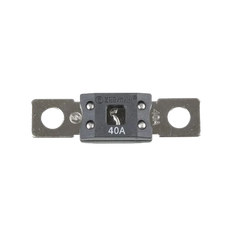
Match the fuse to the downstream load, not to the solenoid rating. A 40A fridge gets a 50A MIDI; a 60A inverter gets an 80A MEGA; a full-load auxiliary at 100A gets a 125A MEGA (one step above the continuous draw). Fuse within 300mm of the battery, before the solenoid.

Q: Can I mount it in any orientation?
Yes. The magnetic coil works vertical, horizontal or upside down. Keep it in a dry well-ventilated spot where the metal housing can dissipate heat, away from direct exhaust heat or standing water (it is splash resistant, not immersion-rated).

Q: Does the solenoid make a noise when it switches?
A small click as the contacts close, barely audible from inside the cab. Chattering (rapid open/close) usually means coil voltage is too low, so check the switch circuit and the ground. A soft buzz means AC ripple on the coil feed, which a small diode or capacitor across the coil terminals will clean up.

Join our community.