EA-Logo-RGB-Master_Yellow-Dark-Grey-Black


Currency

Cart 0

SIGN UP FOR $10 OFF YOUR FIRST ORDER

Sorry, looks like we don't have enough of this product.

Pair with
Estimate shipping
Add order notes
Is this a gift?
Subtotal Free
View cart
Shipping, taxes, and discount codes are calculated at checkout

Your Cart is Empty

Home / Lighting / Driving & light bars

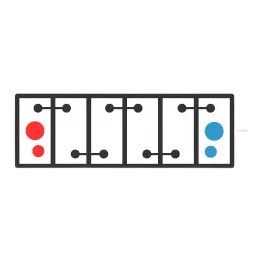
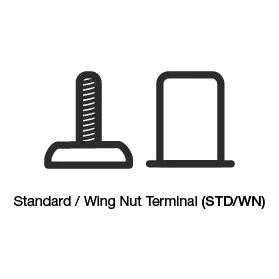
Century N70TX MF 95Ah 12V deep cycle flooded battery, maintenance-free with multi-terminal posts and carry handles, made in AustraliaPolarity diagram of a six-cell 12 volt battery seen from above with a second pair of smaller posts beside the mains, positive at the left and negative at the right, labelled 12 Volt Multi-Terminal – Century batteryLine drawing of a threaded battery post beside a wing nut, labelled Standard / Wing Nut Terminal (STD/WN) – Century deep cycle battery

Century

N70TX MF Deep Cycle Flooded Battery — 95Ah 12V Made in Australia

145106

Century N70TX MF deep-cycle flooded battery. 95Ah 12V, maintenance-free, multi-terminal (standard post plus wing nut), carry handles, made in Australia. For caravans, campers, marine house banks and 4WD auxiliary circuits.

$360.00

4 interest-free payments of $90.00 with
or finance your build with
We accept
Caravans, camper trailers and motorhomes as house or auxiliary battery

Shipping & collection

Worldwide shipping available*
In-store pickup
Professional installation available

*Shipping is calculated at checkout based on your location. Some products can't be delivered to every address.

A flooded deep-cycle battery sized for caravans, camper trailers, 4WD house circuits and marine house banks that need steady energy over hours, not seconds of cranking. Delivers 95Ah of usable capacity in a 302 × 170 × 200mm case that drops into standard N70-pattern battery trays and auxiliary boxes.

Built in Century's Villawood, NSW plant with full-frame cast plates and Platelock internal bracing that resists the shaking that cracks flooded plates in off-road use. Comes with multi-terminal posts (standard tapered post plus threaded stud with wing nut), so the same battery takes OEM clamps or ring lugs. Case includes carry handles, central venting and a flame arrestor.

Charges from a dual-battery isolator, DC-DC charger or 240V smart charger set to flooded profile. Keep it off the alternator mains — use a DC-DC between cranking and house batteries, or the flooded cells sulphate at high alternator voltages.

  • 95Ah deep cycle — steady discharge over hours for house loads
  • Full-frame cast plates — stiffer internal structure resists corduroy roads
  • Platelock bracing — reduces plate movement under vibration
  • Multi-terminal posts — standard tapered post plus threaded wing-nut stud
  • Maintenance-free — sealed caps, no electrolyte top-ups required
  • Carry handles — moulded into the case for one-person lifting
  • State-of-charge window — built-in indicator reads health at a glance
  • Made in Australia — built at Century's Villawood NSW plant for AU conditions

Electrical

Voltage: 12V

Capacity: 95Ah (20hr)

Chemistry

Type: Deep Cycle Flooded

Technology: Maintenance-Free Lead Acid

Physical

Dimensions: 302 × 170 × 200 mm (L×W×H)

Weight: 21.5kg

Terminal: Multi-terminal, D polarity

Carry handles: Yes, moulded case handles
Length302mm
Width170mm
Height200mm
Weight21.5kg

Fits a standard N70 battery tray. Measure the tray before buying: 302 × 170mm footprint, 200mm tall to the terminal top.

Mount upright. Flooded cells rely on gravity to keep electrolyte level across the plates and will weep out of the vent cap if tipped past 20°.

Vent the compartment. Flooded batteries release small amounts of hydrogen when charging; keep a vented space or route the central vent outside the cabin.

For auxiliary use, charge through a DC-DC between the cranking battery and this house battery. Direct alternator charging drives this flooded chemistry at 14.4V+ for long runs and shortens its life.

Confirm polarity before connecting: positive on the left when viewed from the terminal face (D polarity). Clean posts and apply petroleum jelly to resist corrosion.

Caravans, camper trailers and motorhomes as house or auxiliary battery
4WDs and dual-cab utes with dual-battery house circuit
Boats and tinnies as marine house bank
Mobility scooters, golf carts and electric trolleys
Standby and off-grid light-duty backup
N70-pattern battery trays and OEM auxiliary mounts (302 × 170 × 200mm)
Starting batteries — not CCA-rated for engine cranking
Direct alternator connection — pair with a DC-DC charger

Q: What does deep cycle actually mean?
A: A battery built to be drained to 50% (or deeper) and recharged, over hundreds of cycles. Starting batteries deliver short bursts of high current and die if you deep-discharge them. Deep cycle batteries have thicker plates and more active material to survive repeated draw-downs. Different jobs, different internal construction.

Q: What does Ah actually mean?
A: Amp-hours. How much energy the battery stores. 95Ah at the 20-hour rate means it delivers 4.75A for 20 hours. Draw harder and you get fewer total Ah out (Peukert's effect). For planning: a 60W fridge pulling 5A runs about 10 hours before you hit the recommended 50% discharge point.

Q: What's the difference between flooded and AGM?
A: Flooded (this battery) holds liquid acid in six cells, is cheaper per Ah, and needs to mount upright with venting. AGM holds acid in a glass-mat matrix, is spill-proof and tilt-tolerant, costs more per Ah, and typically has shorter deep-cycle life than quality flooded. Flooded wins on $/Ah in a fixed, vented install.

Q: What does maintenance-free actually mean on a flooded battery?
A: Sealed caps you can't open to top up electrolyte. Lead-calcium plate chemistry reduces water loss during charging, so the battery doesn't need refilling across its service life. The cells still vent hydrogen under heavy charge, so you still need an open or vented install.

Q: Can I use it to start my engine?
A: No. Deep cycle plates deliver sustained lower current, not the 300-800A burst a starter motor needs. Running it as a starter will blow the plates in a handful of starts. Pair it with a dedicated cranking battery and a DC-DC charger if your rig needs both.

Q: Why do I need a DC-DC charger instead of the alternator direct?
A: Modern alternators hold 13.8-14.4V, which is a flooded battery's maintenance float voltage — not a bulk-charge voltage. The battery charges to 70-80% and sits there. A DC-DC runs a proper three-stage charge (bulk 14.4V, absorption, float) so you actually hit 100%. Also prevents the alternator cooking the flooded cells on long touring runs.

Q: What does the multi-terminal setup do?
A: Each post carries both a standard tapered lead post (for OEM clamps) and a threaded stud with a wing nut (for ring lugs). Lets you use the same battery for an OEM-replacement install or for a hard-wired house circuit with ring-crimped cables.

Q: How often should I recharge it?
A: Target no deeper than 50% state of charge for best cycle life. In practice: recharge every time it's drawn to 12.0V resting (about 50% SOC) and never leave it discharged — sulphation sets in within days and takes capacity you can't get back.

Q: What's the warranty?
A: 12 months against manufacturing defects, from the date of purchase. Covers plate failures, case cracks and premature capacity loss. Damage from under-charging, sulphation after prolonged discharge, over-rating or alternator-direct charging isn't covered.

Join our community.