EA-Logo-RGB-Master_Yellow-Dark-Grey-Black


Currency

Cart 0

SIGN UP FOR $10 OFF YOUR FIRST ORDER

Sorry, looks like we don't have enough of this product.

Pair with
Estimate shipping
Add order notes
Is this a gift?
Subtotal Free
View cart
Shipping, taxes, and discount codes are calculated at checkout

Your Cart is Empty

Home / Lighting / Driving & light bars

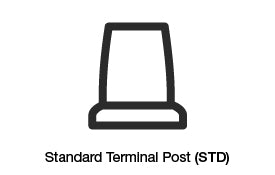
Century 12A 6V 105Ah flooded deep cycle battery with carry handles and STD tapered postsPolarity diagram of a three-cell 6 volt battery seen from above, negative terminal at the top left and positive at the bottom right, labelled 6 Volt – A PolarityLine drawing of a standard tapered lead battery post, labelled Standard Terminal Post (STD)

Century

12A Deep Cycle Flooded Battery — 6V 105Ah

141114

6V 105Ah flooded deep cycle, STD posts, A polarity. Pairs in series for 12V or 24V banks in golf carts, caravans, mobility scooters and solar off-grid.

$190.00

4 interest-free payments of $47.50 with
or finance your build with
We accept
Universal fitment6V deep cycle flooded battery for golf carts, mobility scooters, scissor lifts, caravan house banks (in series for 12V) and solar off-grid.

Shipping & collection

Worldwide shipping available*
In-store pickup
Professional installation available

*Shipping is calculated at checkout based on your location. Some products can't be delivered to every address.

A 6V flooded deep cycle battery that puts 105 amp-hours into golf carts, mobility scooters, scissor lifts and RV house banks wired in series for a 12V or 24V system. Runs fridges, LED lighting, water pumps and camp accessories off the house circuit between charges. Fits standard 6V battery trays in caravans, campers and marine house setups sized for the 227 by 173 by 184 mm case.

The case is 15.8 kg with STD tapered SAE posts and A polarity (positive top-right). Full-frame cast plates and glass mat separators handle repeat deep discharge; Platelock bracing holds the stack together through vibration. Carry handles on the lid make a 2-up swap manageable, and the vented low-maintenance design accepts periodic top-up with distilled water.

Wire two 6V 12A in series for a 12V 105Ah bank, or four in series for 24V. Charge with a deep-cycle profile only, a standard crank charger will cook it. Fuse the positive feed at the battery per cable size and keep the install upright and ventilated.

  • 6V 105Ah capacity — pairs in series for 12V or 24V banks
  • STD tapered posts — standard SAE clamps bolt straight on
  • Full-frame cast plates — deep-discharge cycling and vibration resistance
  • Glass mat separators — reduce plate shedding under repeat cycling
  • Platelock bracing — holds the plate stack through vibration
  • Carry handles — manageable 2-up swap at 15.8 kg
  • Low-maintenance vented — periodic distilled-water top-up

Electrical

Voltage: 6V DC

Capacity: 105Ah at C20

Terminal: STD post

Polarity: A (+ right)

Build

Chemistry: Flooded lead-acid

Separator: Glass mat

Case: ABS

Weight: 15.8 kg

Length: 227 mm

Width: 173 mm

Height to lid: 184 mm

Height to terminals: 205 mm

Weight: 15.8 kg

Mount upright on a flat tray in a ventilated enclosure. Flooded cells vent hydrogen under charge, so a sealed box or under-bonnet install without ventilation is not safe.

Tighten STD post clamps to 10 Nm. Smear a thin film of petroleum jelly or terminal grease over each clamp after torqueing to prevent corrosion.

Fuse the positive feed at the battery, sized to the cable. A MIDI 60A for 6 mm² cable or a MIDI 100A for 10 mm² is typical for a house circuit.

Charge with a deep-cycle or AGM-compatible charger set to a 6V profile (bulk 7.3 to 7.5 V, float 6.75 to 6.9 V). A DC-DC charger with a flooded profile also works. A standard 12V crank charger will overcharge and boil off electrolyte.

Check electrolyte every 3 months. Top up each cell with distilled water to just above the plates. Tap water will shorten the battery's life.

6V deep cycle flooded battery for golf carts, mobility scooters, scissor lifts, caravan house banks (in series for 12V) and solar off-grid.
Mounts upright only, vents hydrogen under charge
Pairs in series for 12V or 24V battery banks
Not suitable for engine cranking (deep-cycle design cannot sustain starter current)
Not for sealed enclosures or under-bonnet install without ventilation

Q: What's the difference between flooded, AGM and GEL deep cycle?
A: Flooded has free liquid electrolyte and vented cells, so it needs top-up with distilled water every few months and mounts upright only. AGM traps electrolyte in a glass mat, sealed and maintenance-free, mounts in any orientation. GEL uses a silica-thickened electrolyte, sealed, slower charge required, best for very deep discharge. All three take a deep-cycle charger profile, not a crank profile.

Q: What does 105Ah at C20 mean?
A: C20 is the industry rate for deep cycle batteries, 105 amp-hours drawn down over 20 hours (so 5.25 A for 20 hours). Draw faster and you get less; draw slower and you get more. Specs that quote big Ah numbers at a slower C100 rate are measuring kinder and don't compare directly.

Q: Why 6V instead of 12V?
A: Two 6V batteries in series give 12V at the same amp-hour rating but with thicker individual plates, so they tolerate deeper discharges with better cycle life than two 12V batteries wired in parallel. The classic Trojan T-105 golf-cart setup is the textbook example. Four 6V in series gives 24V for larger systems.

Q: What does STD terminal mean?
A: Standard tapered SAE lead post, the automotive battery post seen on most car and deep-cycle batteries. Standard cable clamps fit straight on. Different from stud terminals (threaded brass insert) or SB-style quick-connects.

Q: What polarity is this?
A: A polarity, positive terminal top-right when the battery label faces you. Different from D polarity (positive top-left). Match polarity against the vehicle or golf cart's existing wiring before buying so cables reach without stretching.

Q: Can I use this to crank an engine?
A: No. This is a deep-cycle battery with thicker plates built for steady low-rate discharge over many cycles. Engine cranking needs a short burst of 300 to 800 amps that would stress a deep-cycle battery and shorten its life. Use a dedicated starter battery for cranking and this one for house loads.

Q: How do I wire two 6V batteries in series for 12V?
A: Connect the positive terminal of battery A to the negative terminal of battery B with a short heavy cable (6 mm² or larger). The remaining positive on B and negative on A become the 12V output. Capacity stays at 105Ah; voltage doubles to 12V. Fuse the output positive at the battery.

Q: What charger should I use?
A: A deep-cycle flooded or AGM-compatible charger with a 6V profile selected (bulk 7.3 to 7.5 V, float 6.75 to 6.9 V). A DC-DC charger with a flooded profile set for 6V also works. A standard 12V crank charger will overcharge the 6V bank and boil off electrolyte.

Q: How long will it last?
A: With periodic distilled-water top-up and a proper deep-cycle charge profile, a Century flooded deep cycle will deliver several hundred cycles to 50% depth of discharge over roughly 3 to 5 years in typical caravan or golf-cart use. Running it flat repeatedly or leaving it undercharged kills it fast.

Q: Does it need maintenance?
A: Yes, periodically. Flooded cells vent water vapour under charge, so top up each cell with distilled water (never tap) every 3 months or so. Check the terminals for corrosion and keep them clean. Upside: cheaper per Ah than sealed AGM or GEL, with a longer life if looked after.

Join our community.