EA-Logo-RGB-Master_Yellow-Dark-Grey-Black


Currency

Cart 0

SIGN UP FOR $10 OFF YOUR FIRST ORDER

Sorry, looks like we don't have enough of this product.

Pair with
Estimate shipping
Add order notes
Is this a gift?
Subtotal Free
View cart
Shipping, taxes, and discount codes are calculated at checkout

Your Cart is Empty

Home / Lighting / Driving & light bars

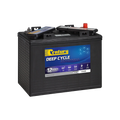
Century C1275 industrial deep cycle battery, 12V 150Ah flooded wet-cell with wingnut terminals, product shotLine drawing of a battery terminal with a threaded post and wing nut on a raised base, labelled W/Nut – Century industrial deep cycle batteryBattery top-view polarity diagram for a six-cell 12 volt battery with positive terminal location marked – Century battery

Century

C1275 Industrial Deep Cycle Battery — 12V 150Ah

141117

Century C1275 industrial deep cycle battery, 12V 150Ah, flooded wet-cell with wingnut terminals. Built for forklift accessory banks, floor scrubbers, mobility scooters, standby power and dual-battery house banks.

150Ah at C20
12V DC flooded wet-cell
Wingnut D-post terminals

$520.00

4 interest-free payments of $130.00 with
or finance your build with
We accept
Industrial deep cycle fitment12V house, standby and commercial equipment battery.

Shipping & collection

Worldwide shipping available*
In-store pickup
Professional installation available

*Shipping is calculated at checkout based on your location. Some products can't be delivered to every address.

A 150Ah industrial deep cycle battery that runs commercial and standby loads where cranking isn't the job. Powers forklift accessory banks, floor-scrubber motors, mobility scooters, aerial-work platform controls, telecoms backup and dual-battery house banks in trucks and caravans.

Twelve volts, 150 amp-hours at the C20 rate, built on flooded wet-cell lead-acid chemistry with thicker full-frame cast plates. Wingnut terminals take ring lugs or spade connections hand-tight for easy swap-outs during maintenance. Case measures 329 by 181 by 245 mm (276 mm over the terminals) and weighs 39.6 kg filled.

What sets it apart

Industrial-grade plates are heavier than a standard automotive flooded deep cycle, so the battery takes repeated 50 percent depth-of-discharge cycles without the plate shedding you see on lighter-duty units. Full-frame construction holds the plates rigid under vibration, which matters on forklifts, scrubbers and anything that bounces on castor wheels or rough slabs. The wingnut post format accepts almost any ring lug and tightens by hand, so service techs swap batteries without carrying a socket set.

Charging, water topping and fusing

This is a flooded wet-cell, not an AGM or sealed battery. Electrolyte levels need checking every 2 to 4 weeks of regular cycling and topping up with distilled water only. Charge on a flooded or wet-cell profile, 14.4 to 14.7 V bulk and 13.5 to 13.8 V float at 20 degrees C. Century publishes CC1212-XLi and CC1225-XLi as the matched industrial chargers. Fuse the main house feed at the battery using a MIDI or MEGA fuse sized to the largest downstream load plus 25 percent, not at the equipment end.

Runs 12V deep-cycle house loads such as fridges, lighting, inverters, scrubber motors and mobility drives. Pair two in series for a 24V bank or two in parallel for a 300Ah house bank. Match it to a cranking battery for engine-start duty, since the deep-cycle plate design cycles rather than delivers bursts.

  • 150Ah capacity — 20-hour C20 rated amp-hour delivery
  • Flooded wet-cell — serviceable chemistry with long industrial cycle life
  • Full-frame plates — rigid grid resists shedding under deep discharge
  • Vibration-resistant case — rated for forklifts, scrubbers and mobility carts
  • Wingnut terminals — hand-tightened for quick service swap-outs
  • D polarity — positive post matches Century industrial range
  • Heavy-duty cast posts — low-resistance for high-current house loads

Electrical

Capacity: 150Ah · C20

Voltage: 12V DC

Chemistry: Flooded lead-acid

Terminal: Wingnut

Polarity: D-post

Build

Case: Vibration-resistant

Plates: Full-frame cast

Service: Maintainable

Weight: 39.6 kg
Length329 mm
Width181 mm
Height (case)245 mm
Height (over terminals)276 mm
Weight39.6 kg

Install upright. The flooded wet-cell design relies on electrolyte sitting below the vent caps, so laying it on its side risks acid loss and terminal corrosion.

Clean the terminal posts with a wire brush before fitting ring lugs. Hand-tighten the wingnuts firmly, then back off a quarter turn and re-torque so the lug seats flat on the post.

Fuse the main battery feed at the battery, within 300 mm of the positive post. MIDI or MEGA fuse sized to the largest downstream load plus 25 percent. A 150A MIDI covers most mobility and small industrial banks; step up to MEGA for inverter loads above 1200 W.

Charge on a flooded or wet-cell profile: 14.4 to 14.7 V bulk, 13.5 to 13.8 V float at 20 degrees C. Century's CC1212-XLi and CC1225-XLi are the matched industrial chargers. Check electrolyte levels every 2 to 4 weeks of regular cycling and top up with distilled water only.

12V house, standby and commercial equipment battery.
Forklift accessory banks, floor scrubbers and aerial work platforms
Mobility scooters and powered medical equipment with 150Ah bank requirement
Caravan and 4WD house banks where wingnut terminals suit the loom
Telecoms, UPS and standby power backup
Two in series for 24V industrial trucks or two in parallel for 300Ah house banks
Not a cranking battery — won't start a petrol or diesel engine
Not for 24V single-battery vehicles — use a dedicated 24V unit
Not for lithium-only charge profiles — needs flooded wet-cell charging voltages

Q: What does deep cycle actually mean?
A: A deep cycle battery is built to be discharged down to 50 percent or lower and recharged repeatedly over hundreds of cycles. Cranking batteries deliver a huge burst of current for a few seconds to start an engine and are not designed for repeated deep discharge; deep cycle batteries do the opposite.

Q: What does C20 mean?
A: C20 is the 20-hour discharge rate. 150Ah at C20 means the battery delivers 7.5 amps for 20 hours before dropping to the cut-off voltage. Pulling more amps than that drops usable capacity; pulling fewer gives you more usable capacity.

Q: Is this battery maintenance-free?
A: No, this is a maintainable flooded wet-cell battery. Electrolyte levels need checking every 2 to 4 weeks of regular cycling and topping up with distilled water only. For a sealed option that needs no watering, look at an AGM or gel deep cycle battery.

Q: Can it be mounted on its side?
A: No. Flooded wet-cell batteries must sit upright so the electrolyte stays below the vent caps. Tilting it risks acid loss and corrosion of the terminals and surrounding metalwork.

Q: What are wingnut terminals and why does Century use them?
A: Wingnut terminals have a threaded post with a hand-tightened wing-shaped nut. Industrial fleets swap batteries often, and wingnuts let service techs connect ring lugs without a socket set, which saves time on mobility carts, scrubbers and forklift accessory banks.

Q: Can I use this as a starting battery?
A: No. Deep cycle plate design delivers steady current for long periods, not the short high-current burst a starter motor needs. Using it for engine cranking shortens service life and may not turn the engine over on a cold morning.

Q: Can I pair two in series for 24V?
A: Yes, two identical C1275 units in series make a 24V 150Ah bank. Match them by date code and keep them within half a volt of each other at rest before pairing, otherwise one carries the other and fails early.

Q: What charger should I use?
A: Any charger with a flooded or wet-cell profile that holds 14.4 to 14.7 V in bulk and drops to 13.5 to 13.8 V float at 20 degrees C. Century's CC1212-XLi (12A) and CC1225-XLi (25A) are the matched industrial chargers. AGM-only or lithium-only profiles don't fully charge a flooded cell.

Q: How many cycles will it last?
A: Industrial deep cycle service life is driven by depth of discharge. Industry reference for mid-tier flooded industrial deep cycle at this price band is roughly 300 to 500 cycles at 50 percent depth of discharge. Charging to 100 percent after each use and keeping discharge above 50 percent lift that number; routine discharges below 20 percent cut it in half.

Q: What warranty cover does it carry?
A: 12-month manufacturer's warranty against defects in materials and workmanship, with Century's standard conditions. Industrial-use warranty does not cover damage from undercharging, overcharging, electrolyte dry-out or use in a cranking role.

Join our community.