EA-Logo-RGB-Master_Yellow-Dark-Grey-Black


Currency

Cart 0

SIGN UP FOR $10 OFF YOUR FIRST ORDER

Sorry, looks like we don't have enough of this product.

Pair with
Estimate shipping
Add order notes
Is this a gift?
Subtotal Free
View cart
Shipping, taxes, and discount codes are calculated at checkout

Your Cart is Empty

Home / Lighting / Driving & light bars
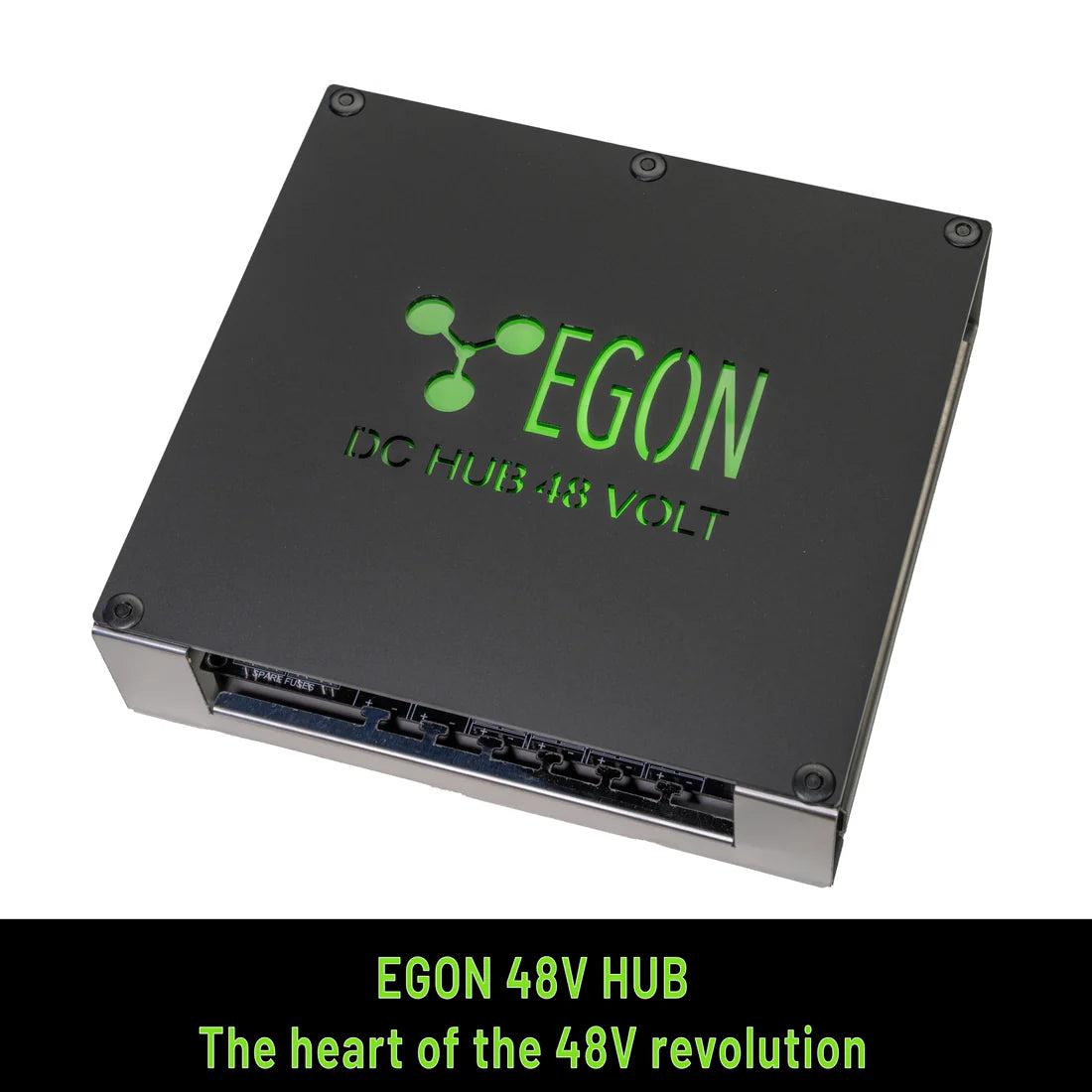
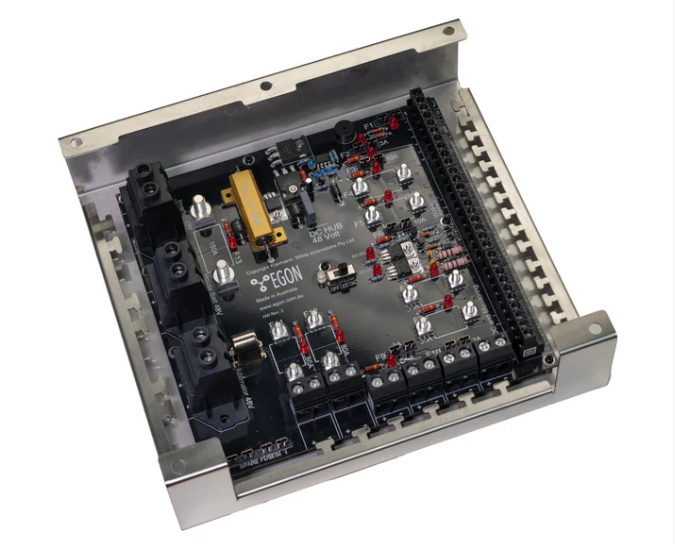
EGON DC-Hub 48V — numbered power distribution board with stainless mounting bracket and plastic cover for a 48V dual-battery systemEGON DC-Hub 48V wiring layout showing alternator, battery, DC-DC converter, inverter and solar connections on one labelled board

Egon

EGON DC-Hub 48V — Power Distribution Hub Kit

DCHUB48V

The central junction for an EGON 48V dual-battery system. Ties the 48V alternator, battery, DC-DC converters, inverter and solar into one numbered board with built-in load-dump protection and CAN bus monitoring.

$2,339.00

4 interest-free payments of $584.75 with
or finance your build with
We accept
EGON 48V ecosystem componentnot a stand-alone 12V or 24V fuse block.

Shipping & collection

Worldwide shipping available*
In-store pickup
Professional installation available

*Shipping is calculated at checkout based on your location. Some products can't be delivered to every address.

The central power distribution hub for an EGON 48V dual-battery system. Routes a 48V alternator, 48V auxiliary battery, two 48V solar channels, two 48V-to-12V DC-DC converters, a 48V inverter and the vehicle's 12V/24V start circuit through one labelled board, so the whole system wires back to a single mounting point. Fits dual-battery builds in 4WDs, caravans, campers and van conversions running EGON's 48V architecture. Not a stand-alone fuse block for a conventional 12V setup.

The circuit board sits inside a stainless mounting bracket with a plastic cover over the live terminals. External face is 250mm high by 265mm wide by 73mm deep, and the bracket mounts in any orientation. Every input and output is numbered to match the EGON wiring diagram, with red LED indicators next to each fuse so a blown circuit shows up at a glance. CAN bus communication links the hub to a Victron Cerbo GX for real-time fault detection, and built-in load-dump protection sits across the 48V alternator input.

The EGON DC-Hub only works as part of the full EGON 48V ecosystem. It needs the matching 48V alternator, EGON-certified 48V LiFePO4 battery with the correct CAN protocol, Wakespeed WS500 Pro controller and the EGON 48V-to-12V DC-DC converters. Fitting it to a non-certified 48V battery voids the warranty. 48V DC sits inside Australia's extra-low-voltage limit so no electrical licence is required, but DC install work on this scale is a job for a qualified auto-electrician or Elevate's workshop.

What sets it apart

Central junction, one board — alternator, battery, DC-DCs, inverter and solar all terminate here.

Numbered wiring — every input and output matches the EGON diagram so an installer isn't guessing which lug goes where.

Red LED per fuse — a blown fuse lights its own indicator so fault-finding stops at the board.

CAN bus connected — talks to a Victron Cerbo GX for live monitoring, charge rates and fault alerts.

Built-in load dump — the 48V alternator input is protected against sudden load drops without extra inline hardware.

Four-year warranty — EGON's standard warranty when run with a certified 48V battery.

Mounting and install

The stainless bracket takes any orientation, so the hub can sit flat under a seat, upright inside a camper battery box, or on the wall of a storage pod. Fasteners come in the box; vehicle-side mounting hardware is up to the installer.

Fuses are built into the board, with a red LED next to each one that lights if that circuit opens. External fuses are not required between the hub and its connected components.

The whole system runs at 48V DC, which is extra-low voltage under Australian legislation, so no electrical licence is required for the install. The work is still a dual-battery system on a vehicle, and getting the alternator, battery, hub, converters and inverter all wired right is a specialist job. Have the install done by a qualified auto-electrician familiar with the EGON 48V system, or bring it to Elevate's workshop.

  • Central junction — one board for alternator, battery, DC-DCs, inverter, solar
  • Numbered wiring — every input and output matches the EGON diagram
  • Per-fuse LED — red indicator lights the blown circuit at a glance
  • CAN bus monitoring — links to a Victron Cerbo GX for live fault detection
  • Load-dump protection — built into the 48V alternator input
  • Stainless bracket — mounts in any orientation under a seat, in a pod or on a wall
  • Protective cover — shrouds the live terminals once wired
  • Four-year warranty — EGON standard when paired with a certified 48V battery

Electrical

System voltage: 48V DC

Alternator input: 150A max

Aux battery input: 150A max

Solar input: 2× 30A max

Inverter output: 150A max

General outputs: 2× 80A max

DC-DC supply: 2× 30A max

Aux 12V/24V supply: 100A max

Build and protection

Dimensions: 250 × 265 × 73 mm

Bracket: Stainless steel

Cover: Plastic shroud

Protection: Load-dump + per-fuse LED

Monitoring: CAN bus (Cerbo GX)

External: 250 mm H × 265 mm W × 73 mm D (face + bracket).

Bracket mounts in any orientation.

The hub is the central mounting point for the whole 48V system. Site it where the alternator, battery, DC-DC converters and inverter can all reach it with short, straight cable runs. Behind a false floor, under a bench seat, or on the wall of a storage pod all work provided the cover can be lifted for fuse checks.

The stainless bracket is drilled for standard M6 or M8 fasteners and takes any orientation. Vehicle-side mounting hardware (self-tappers, Rivnuts, chassis bolts) is up to the installer.

Every input and output on the board is numbered to match EGON's wiring diagram. Follow the diagram terminal by terminal; the hub replaces the whole ad-hoc fuse-and-busbar loom a conventional dual-battery install would need. Fuses are internal, with a red LED next to each so a blown circuit is obvious. No external inline fuses between the hub and its connected components.

48V DC is extra-low voltage under Australian legislation, so no electrical licence is required. The system itself is specialist work: alternator, battery, DC-DC converters, inverter and controller all need to agree on CAN protocol and charge profiles before power is applied. Have the install done by a qualified auto-electrician familiar with the EGON 48V system, or bring it to Elevate's workshop.

not a stand-alone 12V or 24V fuse block.
EGON 48V systems with an EGON-certified 48V LiFePO4 battery
4WDs, caravans, campers and van conversions built around the EGON 48V architecture
Not for conventional 12V or 24V-only dual-battery setups
Not compatible with Toyota's OE 48V hybrid system

Q: What is the EGON DC-Hub 48V?
The central power distribution board for a complete EGON 48V dual-battery system. It replaces the loose busbar, fuse block and relay loom that a conventional 12V dual-battery install would use, and brings every connection into one numbered board with built-in fuses and a protective cover.

Q: What is a 48V DC system and why would I use one?
48V DC runs the same house loads as 12V but at a quarter of the current, which means thinner cable, faster charging and bigger inverter capacity for a given alternator. In an EGON setup a 400Ah battery bank can go from 1% to 99% in about an hour of driving, and 6kW inverters become practical. Still extra-low voltage, so no electrical licence is required to install.

Q: What's in the box?
The hub circuit board, a stainless steel mounting bracket, a plastic protective cover and the mounting fasteners.

Q: What else do I need to run the system?
A 48V alternator (vehicle-specific), an EGON-certified 48V LiFePO4 battery, two 48V-to-12V DC-DC converters, a Wakespeed WS500 Pro alternator controller and a Victron Cerbo GX for monitoring. All sold separately through the EGON range.

Q: Can I use this hub with a non-EGON 48V battery?
No. The hub communicates with the battery over CAN bus, and the battery has to run EGON's certified protocol for charge control and fault handling to work. Running the hub with a non-certified 48V battery voids the warranty and risks the system shutting down when loads are applied.

Q: Does the hub come with fuses?
Yes. Fuses are integrated into the board at every input and output. A red LED sits next to each fuse so if one blows, the specific circuit is obvious. No external inline fuses required between the hub and its connected components.

Q: Can I use this in a 12V-only or 24V-only system?
No. The hub is a 48V system component and expects 48V inputs on the alternator and battery sides. It routes 12V and 24V downstream to the vehicle's start battery and accessory circuits, but it is not a stand-alone 12V fuse block.

Q: Does a 48V install need a licensed electrician?
No. 48V DC sits inside Australia's extra-low-voltage threshold (120V DC), so no electrical licence is required. The system is still specialist work. Have the install done by a qualified auto-electrician familiar with the EGON 48V system, or bring it to our workshop (Elevate Automotive, Electrical Contractor EC17073, Building and Energy WA).

Q: What vehicles does this suit?
4WDs, caravans, campers and van conversions where the owner has committed to the EGON 48V architecture. Vehicle-specific 48V alternators are available for Toyota 2.8/3.0 D4D and 4.5 V8, Isuzu D-MAX and Mercedes Sprinter; generic retrofit kits cover other engines. The hub itself is vehicle-agnostic.

Q: Is it compatible with Toyota's factory 48V hybrid system?
No. The EGON 48V system is a separate house-power architecture and is not designed to tie into Toyota's OE 48V hybrid drivetrain.

Q: What's the warranty?
4 years against manufacturing defects. Voided if the hub is run with a non-certified 48V battery or one without the correct CAN protocol.

Join our community.