EA-Logo-RGB-Master_Yellow-Dark-Grey-Black


Currency

Cart 0

SIGN UP FOR $10 OFF YOUR FIRST ORDER

Sorry, looks like we don't have enough of this product.

Pair with
Estimate shipping
Add order notes
Is this a gift?
Subtotal Free
View cart
Shipping, taxes, and discount codes are calculated at checkout

Your Cart is Empty

Home / Lighting / Driving & light bars
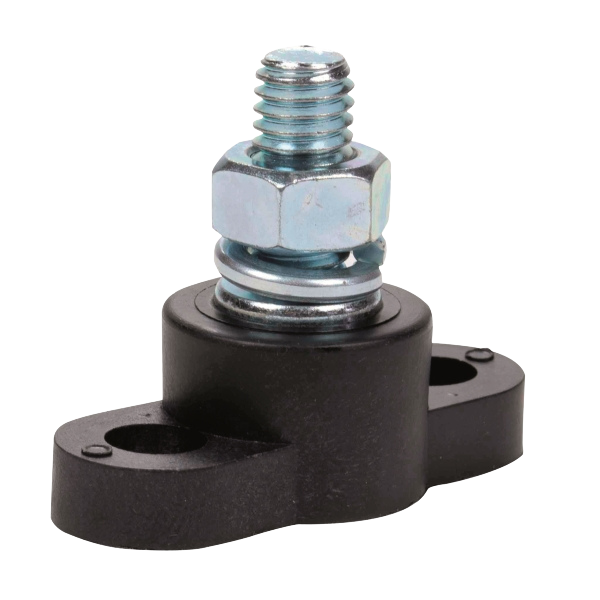
Junction Block — Insulated 10mm Stud 250A (Red or Black)Junction Block — Insulated 10mm Stud 250A (Red or Black)

Elevate Automotive

Junction Block — Insulated 10mm Stud 250A (Red or Black)

JB3816-2

Insulated single-stud junction block. 10mm brass stud rated to 250A DC. Red for positive, black for negative.

Rating: 250A
Stud: 10mm
Voltage: Up to 48V DC

$29.00

4 interest-free payments of $7.25 with
or finance your build with
Colour
We accept
Universal fitmentInsulated 10mm stud junction block for high-current DC distribution.

Shipping & collection

Worldwide shipping available*
In-store pickup
Professional installation available

*Shipping is calculated at checkout based on your location. Some products can't be delivered to every address.

A single-stud insulated junction block for high-current DC distribution work. One 10mm brass stud sits proud through a moulded thermoplastic base so several ring-terminated cables join at one point without splicing. Rated to 250A, which suits it to main positive or negative distribution on 12V and 24V vehicle systems.

The insulated base means the stud is not electrically live against the mounting surface, so it is safer to mount on a metal panel than a bare brass post. Choose red for a positive-side junction, black for negative; colour is a wiring convention that lets an auto electrician identify polarity at a glance during future faultfinding.

The block itself does not add circuit protection. Fuse the main feed close to the battery for the cable feeding the block, and fuse every branch leaving the block for its own cable size. When stacking multiple ring terminals on the stud, put the heaviest cable directly against the base and stack lighter cables on top; tighten the M10 nut firm hand-tight (around 15 to 20 Nm) to avoid stripping the brass thread.

You'll also need

[series-of-copper-tube-lugs] [series-of-b-and-s-single-core-cable]
  • 250A rated — handles main-feed cable joins
  • Insulated base — safe on a metal mounting panel
  • Brass stud — corrosion-resistant, high conductivity
  • Colour coded — red positive, black negative
  • Surface mount — bolts down to any flat panel

Electrical

Amperage 250A

Voltage Up to 48V DC

Physical

Stud thread M10

Stud material Zinc-plated brass

Base material Thermoplastic

Mount Surface

Colour Red or black

Length: 64mm

Width: 19mm

Height: 52mm

Weight: 0.3kg

Insulated 10mm stud junction block for high-current DC distribution.
12V, 24V and 48V DC systems
240V AC mains distribution (needs a mains-rated compliance terminal block, not this product)

Q: What is a junction block used for?
A junction block gives you a common point to bring several cables together. In a 4WD or caravan install that usually means a shared positive or negative bus point where the main feed lands and the individual accessory feeds branch off, without cutting or splicing the cables. It keeps a build tidy and makes future changes easier.

Q: How is this different from a bus bar?
A bus bar has multiple studs on one insulated base and is designed for many small-to-medium cables branching from one source. This junction block has a single large stud and is designed for a handful of heavy cables joining at one point. Pick the block for high-current main-feed joins, and a bus bar for distributing to many smaller circuits.

Q: Which colour do I need?
Red for positive-side joins, black for negative-side. The colour has no electrical function; it is a wiring convention that lets you and any auto electrician working on the vehicle later identify polarity at a glance. Getting it wrong is a labelling problem, not an electrical one, but it makes future faultfinding much harder.

Q: What ring terminal size do I need?
Size the ring's hole for a 10mm stud and the ring's barrel for the cable you are running. A 25mm² cable feeding this block wants a 25-10 ring terminal (25mm² cable, 10mm stud hole); a 50mm² cable wants a 50-10. Crimp with a hexagonal die crimper and finish with adhesive-lined heat shrink over the barrel.

Q: Is this suitable for marine use?
Yes for a dry marine compartment such as a helm console or a battery box below decks. The brass stud is zinc-plated and the thermoplastic base resists salt fog. For an open-cockpit or engine-bay position that gets wet, we recommend a purpose-made sealed marine bus point rather than an insulated stud on its own.

Q: How tight do I do up the stud nut?
For an M10 brass stud, firm hand-tight with a small spanner (around 15 to 20 Nm) is right. Overtorquing strips the brass thread; undertorquing leaves a high-resistance joint that will heat up and eventually fail. If several ring terminals stack on the stud, put the heaviest cable directly against the base and stack lighter ones on top.

Q: Do I need a fuse before this?
A junction block is not a fuse. The battery feed running into the block still needs its own fuse close to the battery, sized to protect the cable feeding the block. Every branch leaving the block also needs its own fuse sized to the branch cable. The block does not add or remove circuit protection, only joins cables.

Q: Can I use this at 48V?
Yes for 48V DC. The brass stud and thermoplastic base have plenty of dielectric margin at 48V and the 250A rating is unchanged. It is not rated for 240V AC mains work, which needs a certified compliance terminal block installed by a licensed electrician (that's us, EC17073).

Q: How do I mount it?
Bolts down through two 5mm holes in the base, spaced 33mm apart. Pick a flat panel where the ring terminals stacked on the stud will not be knocked or short against surrounding metalwork. Fasteners are not included; use whichever size and length suits the panel thickness you are mounting to.

Join our community.