EA-Logo-RGB-Master_Yellow-Dark-Grey-Black


Currency

Cart 0

SIGN UP FOR $10 OFF YOUR FIRST ORDER

Sorry, looks like we don't have enough of this product.

Pair with
Estimate shipping
Add order notes
Is this a gift?
Subtotal Free
View cart
Shipping, taxes, and discount codes are calculated at checkout

Your Cart is Empty

Home / Lighting / Driving & light bars
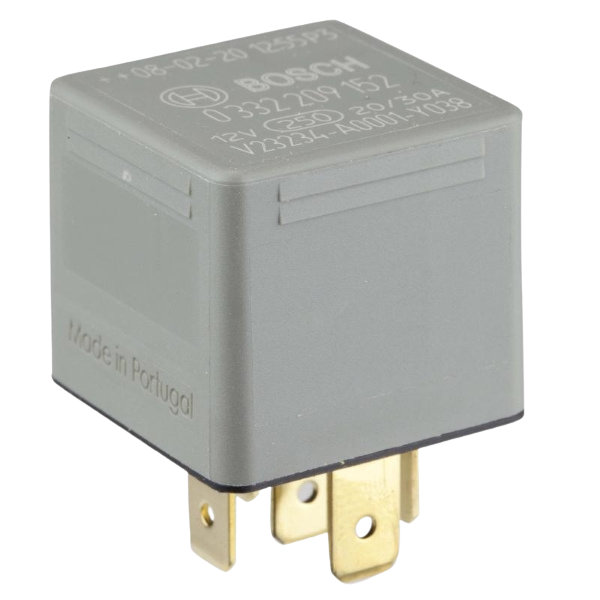
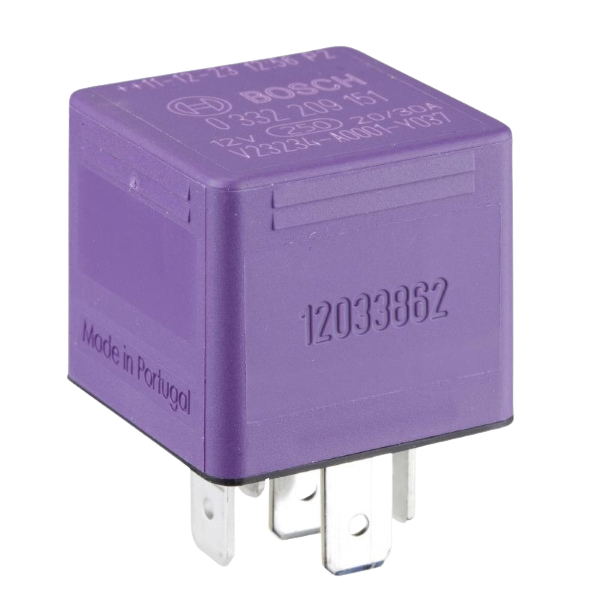
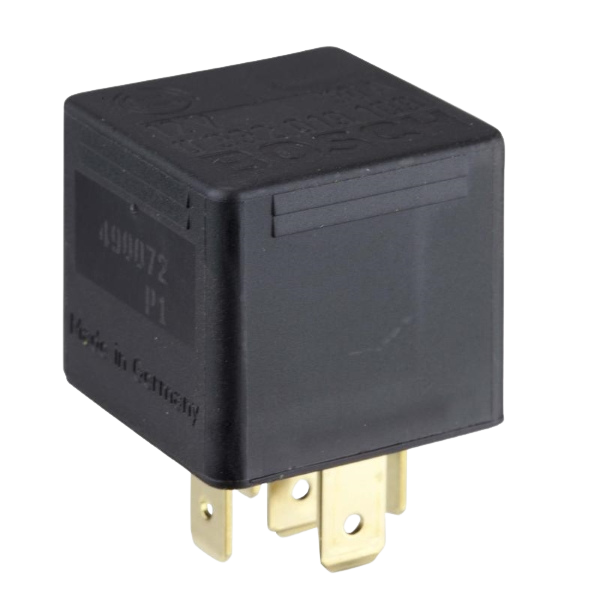
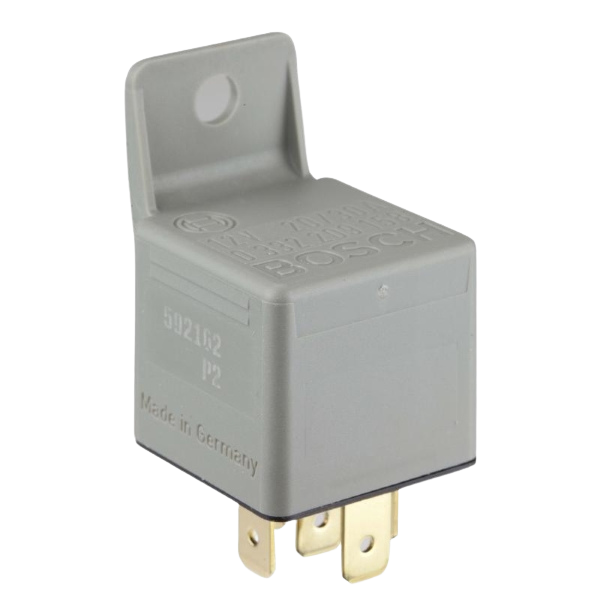
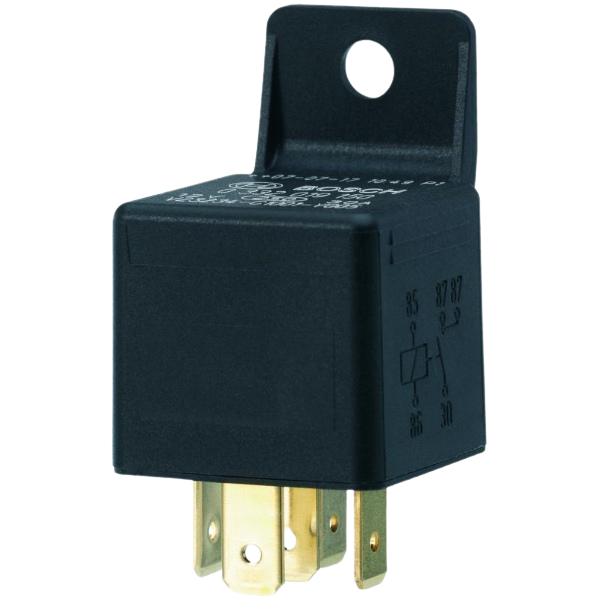
Britax 12V mini changeover relay in ISO 280 5-pin footprint, black weatherproof body with 6.3mm blade terminals on the bottom faceBritax 12V mini relay top view showing 30/20A changeover contact rating label on the black sealed plastic bodyBritax 12V mini relay with bracket variant showing bolt-on steel mounting bracket clipped to the relay bodyBritax 12V mini relay side view showing the compact ISO 280 mini form factor sized for standard mini-relay socketsBritax 12V mini relay pin diagram showing the 5-pin ISO 280 layout: pins 85 and 86 coil, 30 common, 87 normally-open and 87a normally-closed

Britax

Mini Relay 12V — 30/20A 5-Pin Changeover

332209151

12V mini changeover relay in the ISO 280 5-pin footprint. Switches 30A on the normally-open pin and 20A on the normally-closed pin. Diode-protected, resistor-protected and bracket-fitted variants available.

30/20A · 12V DC
5-Pin ISO 280
Silver AgSnO₂

$12.00

4 interest-free payments of $3.00 with
or finance your build with
Current
We accept
Universal fitment12V mini relay in the ISO 280 5-pin footprint

Shipping & collection

Worldwide shipping available*
In-store pickup
Professional installation available

*Shipping is calculated at checkout based on your location. Some products can't be delivered to every address.

A 12V mini changeover relay that switches high-current loads on a small low-current trigger, like a horn, driving lights, an air compressor, an inverter feed-line, an aftermarket starter or a light bar. Uses a 5-pin ISO 280 footprint that drops into any standard mini-relay socket. Fits 4WDs, utes, caravans, boats, trailers and service vehicles anywhere a switched auxiliary circuit runs off a low-current signal.

Housed in a weatherproof black plastic body with silver AgSnO₂ contacts sized for continuous 30A switching on the normally-open pin and 20A on the normally-closed pin. Terminals are 6.3mm spade blades on the bottom face. Variants ship with a freewheel diode across the coil, a resistor across the coil, or plain (no spike suppression), and some carry a bolt-on steel bracket for permanent mounting.

The 30A rating is the continuous switching ceiling on the normally-open leg. Anything drawing higher, like a winch, a large inverter or a 40A-plus driving-light bank, needs a heavier relay or a contactor. Fuse the switched circuit at the source, not at the relay itself. Fit a diode-protected variant when the coil is driven by ECU, PCM, canbus or LED-flasher electronics; an unsuppressed coil can spike back into the driver and destroy it.

  • Compact 5-pin — drops into any standard mini-relay socket
  • 30/20A rated — continuous switching for lights, horns, pumps and compressors
  • Silver AgSnO₂ — pit-resistant contacts across many switching cycles
  • Weatherproof body — sealed for engine-bay, underbonnet and exposed mounts
  • Spike suppression — diode or resistor variant kills back-EMF into the trigger
  • Bracket option — bolt-on steel mount for permanent installs
  • Britax build — workshop-trusted AU-electrical brand for decades

Electrical

Voltage: 12V DC

Current N/O: 30A

Current N/C: 20A

Coil resistance: ~80Ω

Coil current: ~150mA

Contacts: Silver AgSnO₂

Suppression: Diode / Resistor / None (variant)

Physical

Form: ISO 280 mini

Pins: 5-pin

Terminals: 6.3mm blade

Body: Sealed plastic

Bracket: Steel (variant)
Length: 29mm

Width: 29mm

Height: 26.5mm

Weight: 0.25kg

12V mini relay in the ISO 280 5-pin footprint
12V systems (4WDs, utes, caravans, boats, trailers, service vehicles)
24V systems — coil will burn out; use the 24V Britax equivalent
Loads above 30A continuous on the N/O leg — use a heavier relay or contactor
Loads above 20A continuous on the N/C leg
Direct submersion or continuous soaking

Q: What does 5-pin changeover mean?
A changeover (C/O) relay has both a normally-open (N/O) and a normally-closed (N/C) output, plus a common pin. With the coil off, common connects to N/C. When the coil energises, common flips to N/O. The 5-pin layout gives you both outputs on one relay: two coil pins (85, 86), a common pin (30), an N/O pin (87) and an N/C pin (87a).

Q: What is the difference between N/O and C/O variants?
N/O (normally open) means the switched circuit is off until the coil energises. C/O (changeover) means one circuit is on and another is off in the resting state, then they swap when the coil energises. Use N/O for a simple on-off switch (driving lights, fridge). Use C/O when you want two circuits that alternate, for example a low-beam and high-beam swap, or a load-priority swap between two batteries.

Q: Do I need the diode or resistor-protected version?
Yes if the coil is switched by ECU, PCM, canbus, LED flasher or any solid-state driver. Plain relays throw a voltage spike (back-EMF) into the trigger every time the coil turns off, which can damage the driver over time. Diode-protected relays clamp the spike at ~0.7V. Resistor-protected relays bleed the spike through a parallel resistor. Both work; diode is stronger, resistor is more forgiving of accidental reverse polarity on the coil.

Q: What is back-EMF and why does it matter?
When the coil turns off, the magnetic field collapses and induces a reverse voltage spike (back-EMF, or BEMF). Old-school mechanical switches shrug it off. Modern electronic switches such as canbus outputs, LED flasher units and ECU-driven relays can be killed by it. That is why factory relays for modern vehicles are almost always diode or resistor protected.

Q: Can I use this for a winch or a big inverter?
No. Winches draw 200 to 500A under load and large inverters over 1500W pull well over 100A. This relay is rated for 30A continuous on the normally-open leg. For a winch use a heavy-duty solenoid or contactor rated 200A or higher. For a large inverter use a high-current relay or a dedicated positive isolator.

Q: What size fuse should the switched circuit have?
Fuse the switched circuit at the source (the battery or distribution block), sized to the load, and never above the relay contact rating. For a 30A relay that is 30A max. Common pairs: driving lights up to 130W pair on a 15 to 20A fuse; horn on a 15A fuse; compressor on a 20 to 30A fuse to match the compressor's own inrush rating. Never fuse the relay itself.

Q: What size trigger wire drives the coil?
The coil draws roughly 150mA at 12V, so trigger wiring is small. Anything from 0.5mm² (20 AWG) upward is fine for the length runs you would see in a vehicle. A dashboard switch, a factory pilot output or an ECU signal all drive the coil comfortably.

Q: Can I run this on 24V?
No. The coil is wound for 12V nominal. Applying 24V will burn the coil out in seconds. Britax makes matching 24V versions in the same body; search the Relays type for the 24V equivalent.

Q: What do pin numbers 30, 87, 87a, 85, 86 mean?
Standard ISO 280 pin labels. 85 and 86 are the coil (polarity does not matter unless the relay is diode-protected, in which case 86 is positive and 85 is negative). 30 is the common contact, fed from the battery through a fuse. 87 is the normally-open output that feeds the load when the coil energises. 87a is the normally-closed output that feeds the load when the coil is off.

Q: Is it weatherproof for engine bay use?
Yes. The body is sealed plastic that resists dust, splash and underbonnet heat within its rated operating range. It is not for direct immersion or continuous soaking; a wheel-well or chassis-rail mount inside a fuse box or relay panel is ideal.

Q: What terminal size are the pins?
6.3mm (1/4 inch) male blade terminals on all five pins. Standard automotive female spade crimps fit; use the fully-insulated type for engine-bay work and 4.5 to 6mm² wire on the 30/87 contacts, 0.5 to 1.5mm² on the 85/86 coil pins.

Q: Do I need the bracket-fitted variant?
Only if you want to bolt the relay to a bulkhead or a chassis rail rather than plug it into a socket. The bracket clips onto the same body and gives you a single bolt-mount hole. If your relay is going into a fuse box or a distribution board that already carries relay sockets, skip the bracket.

Join our community.