EA-Logo-RGB-Master_Yellow-Dark-Grey-Black


Currency

Cart 0

SIGN UP FOR $10 OFF YOUR FIRST ORDER

Sorry, looks like we don't have enough of this product.

Pair with
Estimate shipping
Add order notes
Is this a gift?
Subtotal Free
View cart
Shipping, taxes, and discount codes are calculated at checkout

Your Cart is Empty

Home / Lighting / Driving & light bars
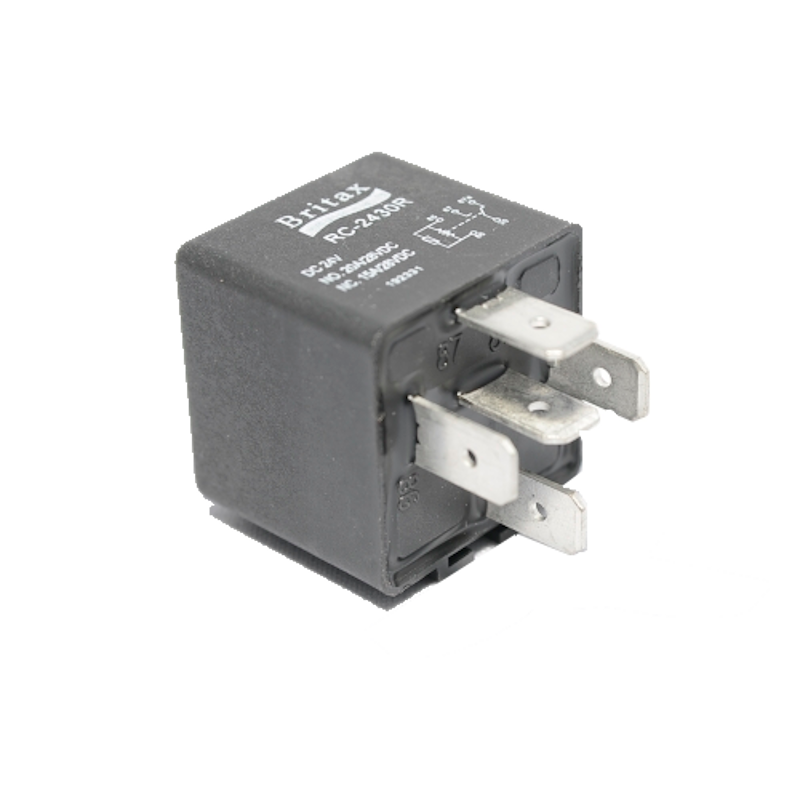
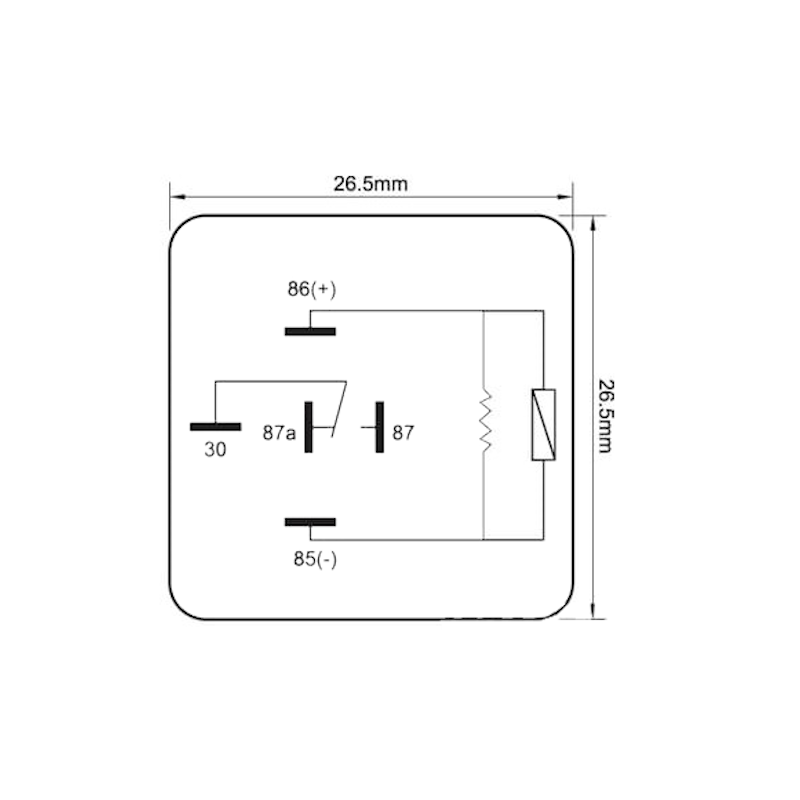
Britax 24V mini changeover relay with 5-pin ISO 280 base and built-in resistor, 20A normally-open and 15A normally-closed contactsBritax 24V mini relay pin diagram showing ISO 280 layout: pin 30 common, 85 and 86 coil terminals, 87 normally-open, 87a normally-closed

Britax

24V Mini Relay — 20A Changeover 5 Pin with Resistor

RC-2430R

24V mini changeover relay with built-in resistor protection. 20A on the normally-open contact, 15A on the normally-closed. 5-pin ISO 280 base drops straight into standard mini-relay sockets.

20A/15A
24V DC
5-pin ISO 280 changeover

$11.00

4 interest-free payments of $2.75 with
or finance your build with
We accept
Universal 24V fitment5-pin changeover mini relay for 24V trucks, buses, caravans, agricultural machinery and heavy equipment

Shipping & collection

Worldwide shipping available*
In-store pickup
Professional installation available

*Shipping is calculated at checkout based on your location. Some products can't be delivered to every address.

A 24V mini changeover relay that switches one output on and a second output off from a single trigger. Runs headlight high-vs-low beam switching, auxiliary driving lights, horn circuits and work-light control off the one coil in 24V trucks, buses, caravans, agricultural machinery and heavy equipment. Pin layout follows ISO 280 so it drops straight into standard 5-pin mini-relay sockets.

Switches 20A continuous on the normally-open contact (pin 87) and 15A continuous on the normally-closed contact (pin 87a). Trigger coil draws about 90mA at 24V and includes a resistor across the coil that suppresses the back-EMF spike which fries sensitive electronics when the coil releases. 6.3mm blade terminals for straight-in wiring. Sealed body stands up to under-dash vibration, splash and under-bonnet heat.

Fuse the load side at the source, not at the relay, and size the trigger wire for the 90mA coil draw rather than the switched load. Picking a changeover 5-pin over a plain normally-open 4-pin only pays off when both contacts are actually used; a single-output circuit runs cheaper on a 4-pin relay.

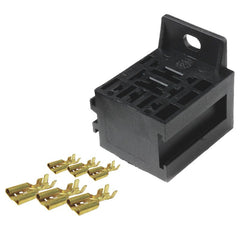
Pairs with
  • 24V coil — matches truck, bus and heavy-vehicle systems
  • Changeover switching — one trigger drives two outputs
  • 20A / 15A rating — handles lights, horns and pumps
  • Resistor protected — tames the coil release spike
  • ISO 280 pin layout — drops into standard 5-pin sockets
  • 6.3mm blade terminals — standard automotive crimp or spade
  • Sealed body — stands splash, vibration and under-bonnet heat

Electrical

Coil voltage: 24V DC

Coil current: ~90mA

N/O rating: 20A @ 24V

N/C rating: 15A @ 24V

Trigger pin: 85

Common pin: 30

Output pins: 87 / 87a

Physical

Pin layout: ISO 280

Terminals: 6.3mm blade

Body: Sealed

Contact life: ~500,000 cycles
Length: 26mm

Width: 26mm

Height: 25mm

Weight: 0.03kg

5-pin changeover mini relay for 24V trucks, buses, caravans, agricultural machinery and heavy equipment
24V DC systems (trucks, buses, HV caravans, heavy equipment, industrial)
ISO 280 standard 5-pin mini-relay sockets
12V DC systems — coil won't energize reliably; use the 12V variant
Loads over 20A continuous (winches 200-500A, large inverters 100A+, alternator mains 100-250A) — use a dedicated solenoid or heavy-duty contactor
Submerged installations

Q: What does "changeover relay" mean?
A changeover relay has one input and two outputs. When the coil is OFF, pin 30 (common) connects to pin 87a (normally-closed). When the coil energizes, that connection breaks and pin 30 swings to pin 87 (normally-open). One trigger switches one circuit on while switching another one off. Useful for high-beam vs low-beam, auxiliary vs factory lighting, or any either-or circuit.

Q: What's N/O and N/C?
N/O = normally-open: that contact is OPEN (no current) when the coil is OFF, and CLOSES when the coil energizes. N/C = normally-closed: that contact is CLOSED (current flows) when the coil is OFF, and OPENS when the coil energizes. Pin 87 is the N/O terminal; pin 87a is the N/C terminal.

Q: What loads is 20A good for?
20A on the N/O contact handles headlight-high-vs-low-beam switching, driving light bars, horn circuits, radiator fans, auxiliary work lights, small water pumps, interior lights and most accessory switching in a 24V truck or bus. 15A on the N/C contact handles the lower-draw side of a changeover circuit (parking lights, running lights, a smaller aux load).

Q: Can I use this for a 24V winch?
No. 24V winches typically draw 100 to 300A under load, which is 5 to 15 times this relay's 20A ceiling. The N/O contact will weld closed on first use. A winch needs a dedicated winch solenoid or heavy-duty contactor rated for the actual stall current.

Q: What does "resistor protected" mean?
A resistor sits across the coil (between pins 85 and 86) and gives the collapsing magnetic field somewhere to dump its energy when the coil switches off. Without it, that collapse spikes the coil-driver circuit with a short high-voltage pulse (back-EMF) which can damage sensitive electronics like ECUs, body control modules or CAN-bus controllers that trigger the relay. The resistor option is the default pick for anything newer than a 1990s truck.

Q: What's ISO 280?
ISO 280 is the international standard that defines mini-relay pin spacing and terminal size. Any 5-pin mini relay socket on a modern 24V truck or bus accepts an ISO 280 relay. If the relay you're replacing has 6.3mm wide blade pins on roughly a 10mm spacing pattern, it's ISO 280.

Q: Will this fit a 12V system?
No. The coil is wound for 24V nominal and won't reliably energize at 12V (the contacts may chatter or fail to pull in). For a 12V circuit, use the matching 12V variant of this mini relay.

Q: What size trigger wire do I need?
The coil draws about 90mA at 24V, so a short run on 0.75mm² (18 AWG) handles it easily. The trigger wire never sees the switched load; it only carries the coil current. Size the LOAD-side cable for the switched current (20A load wants 2.5mm² or larger depending on run length).

Q: Where should the fuse go?
Fuse the LOAD side at the source, between the battery or distribution block and pin 30. Match the fuse size to the switched load, not the relay rating (a 10A load wants a 15A fuse, not a 20A fuse). The coil side also usually sits behind a small fuse at the switch or ECU; refer to the vehicle's circuit for that.

Q: Is this waterproof?
The body is sealed against splash, dust and vibration and sits happily under-dash, in a sealed fuse box or in a protected engine-bay location. It isn't designed to be submerged. If the relay will see direct water (an exposed trailer harness, an engine-bay bulkhead with no cover), fit it inside a weatherproof relay enclosure.

Q: What are pins 30, 85, 86, 87, 87a?
Standard ISO 280 mini-relay layout: pin 30 is the common input (feed from fused battery supply); pin 85 and pin 86 are the coil terminals (one goes to the switch or ECU trigger, one to ground); pin 87 is the normally-open output (energizes when the coil pulls in); pin 87a is the normally-closed output (de-energizes when the coil pulls in). The resistor sits inside the body between pins 85 and 86.

Q: What's the warranty?
12-month manufacturer warranty against defects in materials or workmanship. Overcurrent damage, coil burnout from wrong-voltage supply, back-EMF damage from bypassing the resistor, and submersion sit outside warranty.

Join our community.