EA-Logo-RGB-Master_Yellow-Dark-Grey-Black


Currency

Cart 0

SIGN UP FOR $10 OFF YOUR FIRST ORDER

Sorry, looks like we don't have enough of this product.

Pair with
Estimate shipping
Add order notes
Is this a gift?
Subtotal Free
View cart
Shipping, taxes, and discount codes are calculated at checkout

Your Cart is Empty

Home / Lighting / Driving & light bars
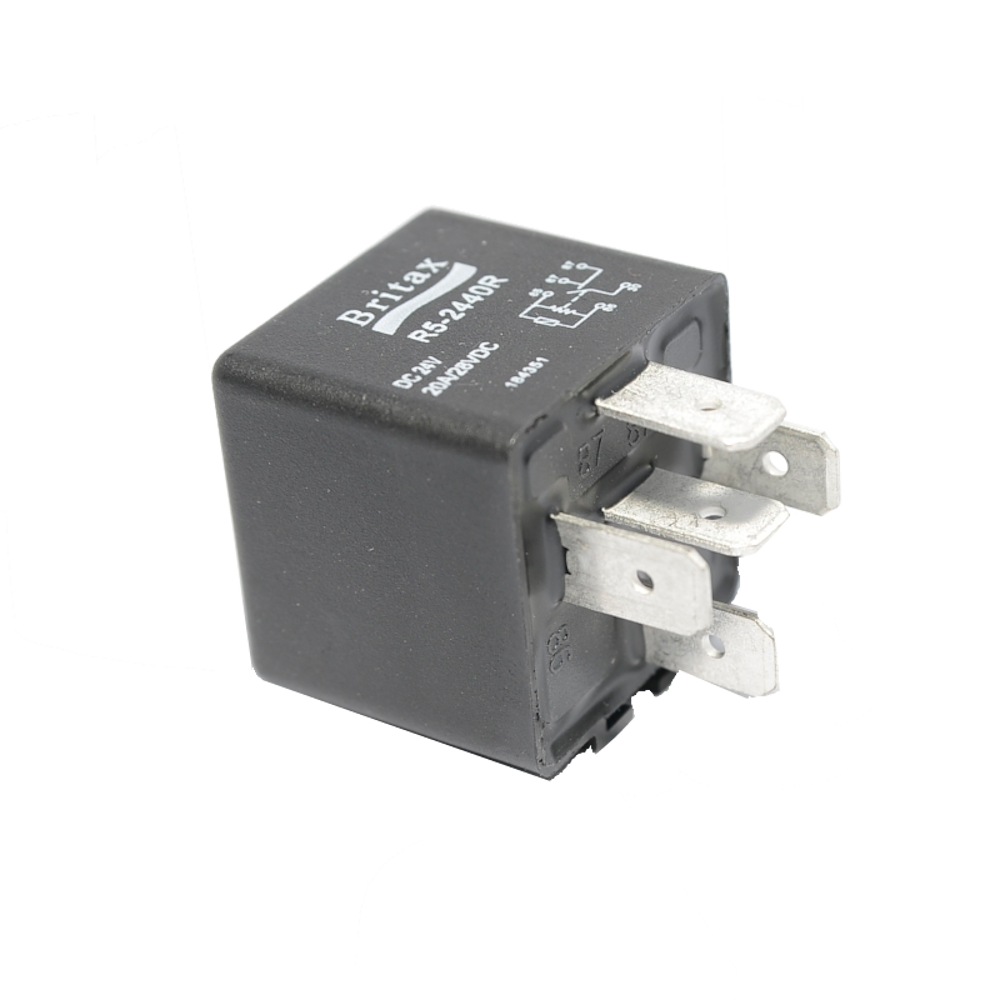
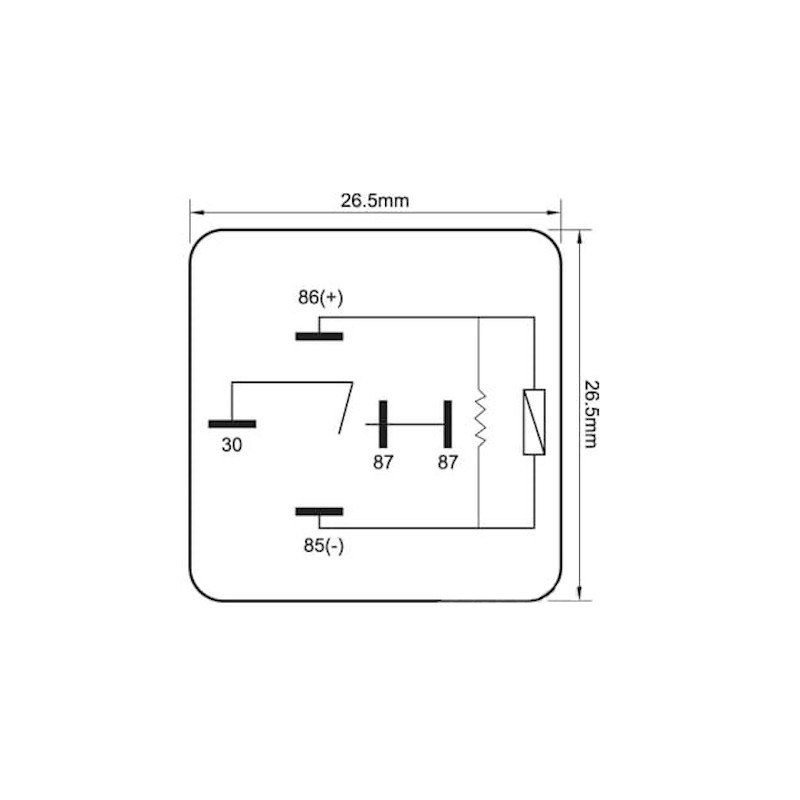
Britax 24V 40A normally open mini relay (R5-2440R) with resistor-protected coil, 5-pin ISO 280 footprint, 6.3mm blade terminals, front angle on transparent backgroundPin diagram for Britax R5-2440R 24V 40A N/O mini relay showing 5-pin ISO 280 layout: pin 30 common, pins 85 and 86 coil, pin 87 normally open output, pin 87a unused

Britax

24V Mini Relay — 40A Normally Open 5 Pin with Resistor

R5-2440R

24V 40A normally open mini relay with resistor-protected coil for ECU and CAN-bus safe switching. 5-pin ISO 280 footprint, 6.3mm blade terminals, 26 by 26 by 25mm compact housing.

40A @ 24V DC N/O
Resistor protected
ISO 280 5 pin

$10.00

4 interest-free payments of $2.50 with
or finance your build with
We accept
Universal 24V fitment24V normally open mini relay with resistor-protected coil for ECU and CAN-bus safe switching in 24V trucks, buses, heavy equipment, caravans, agricultural machinery and marine.

Shipping & collection

Worldwide shipping available*
In-store pickup
Professional installation available

*Shipping is calculated at checkout based on your location. Some products can't be delivered to every address.

A compact 24V normally open relay that switches up to 40A of high-current load from a low-current trigger. Runs auxiliary driving lights, work lights, air horns, electric fans and winch controllers off a single dash switch, ECU output or ignition feed. Fits 24V trucks, buses, caravans, heavy equipment, agricultural machinery and marine switchboards into any standard ISO 280 mini relay socket.

The 5 pin configuration follows the ISO 280 footprint: pin 30 common, pin 85 and 86 coil, pin 87 normally open output, pin 87a left unused on this normally open version. Internal resistor sits across the coil to clamp back-EMF when the coil de-energises, protecting the switching ECU, CAN-bus module or driver circuit upstream. Housing is 26 by 26 by 25mm with 6.3mm blade terminals; plugs straight into any Britax, Narva or Hella 5-pin mini relay base.

The 40A rating is contact capacity, not sustained load capacity. Keep continuous current under 30A for long contact life; fuse the output circuit at the source based on the actual load, not at the relay. 24V coil only, will not energise reliably on a 12V trigger.

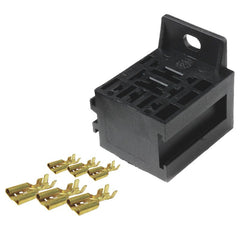
Pairs with
  • 40A normally open — switches high-current loads from a low-current trigger
  • Resistor protected coil — clamps back-EMF to protect ECU and CAN-bus
  • 24V coil — matched to truck, bus and heavy-equipment systems
  • ISO 280 5 pin — fits standard mini relay sockets
  • 6.3mm blade terminals — pushes into any 5-pin mini relay base
  • Compact 26mm housing — fits tight behind-dash and switch-panel spaces
  • Britax built — recognised AU auto-electrical trade brand

Electrical

Rating: 40A @ 24V DC

Contacts: Normally Open

Coil voltage: 24V DC

Coil current: ~65mA

Suppression: Resistor

Pin numbering: ISO 280

Pin layout: 30/85/86/87

Physical

Dimensions: 26 × 26 × 25mm

Terminals: 6.3mm blade

Mounting: Socket-mount

Contact life: ~500,000 cycles
Length: 26mm

Width: 26mm

Height: 25mm

Weight: 0.1kg

24V normally open mini relay with resistor-protected coil for ECU and CAN-bus safe switching in 24V trucks, buses, heavy equipment, caravans, agricultural machinery and marine.
24V DC systems (trucks, buses, agricultural, heavy equipment, 24V marine)
ISO 280 standard mini relay sockets (Britax, Narva, Hella bases)
12V DC systems (24V coil will not energise reliably on 12V trigger)
Winches 100-300A under load (use a solenoid or 300A continuous-duty contactor instead)
Large inverters > 1000W (draw over 40A at 24V — needs higher-rated contactor)
Submerged or fully-exposed engine-bay mounting (sealed version required)

Q: What does "normally open" actually mean on a relay?
Normally open (N/O) means the contact is open when the coil is not powered. Switch on the trigger, the coil energises, the contact closes, current flows to the load. Switch off the trigger, the contact springs back open and the load drops out. Use N/O for anything that should default to OFF: lights, horns, fans, pumps.

Q: What is the resistor on this relay for?
The resistor sits across the coil terminals (pins 85 and 86). When the coil de-energises, the collapsing magnetic field generates a reverse voltage spike (back-EMF) that can damage the ECU, CAN-bus module or driver circuit that switched the relay. The resistor clamps that spike so the upstream electronics stay safe. Use resistor-protected relays on anything triggered by an ECU or sensitive driver circuit.

Q: Why 5 pins when it's a normally open relay?
The 5-pin footprint matches the ISO 280 standard base used across the mini-relay family (changeover, normally open, and resistor-protected versions all share the same base). Pin 87a sits unused on this N/O version but keeps the physical footprint identical, so one base fits any mini relay in the range.

Q: Can a 40A relay handle a winch or large inverter on 24V?
No. Winches draw 100 to 300A under load; a 2000W inverter at 24V draws over 80A continuous. The 40A contact rating is the ceiling: exceed it and the contacts weld closed on the first use. Winches use a solenoid or a 300A continuous-duty contactor; inverters use direct-wired battery leads with an ANL fuse at the source. Keep this relay on loads under 30A continuous for long contact life.

Q: Can I run this relay on a 12V system?
No. The coil is wound for 24V and will not energise reliably on a 12V trigger: the contacts chatter or stay open. For 12V use the Britax 12V equivalent (RC-2412R, R5-1240R etc.). Running a 24V coil on 12V isn't dangerous, it just won't switch properly.

Q: What size trigger wire do I need for the coil?
The 24V coil draws around 65mA, so 0.5mm² (20 AWG) wire is more than enough for the trigger side. The real sizing is on the load side (pins 30 and 87): 6mm² (10 AWG) for loads under 40A, dropped to 4mm² or 2.5mm² for loads under 25A. Match the fuse to the wire, not the relay.

Q: Where does the fuse go on a relay-switched circuit?
At the source, between the battery (or power distribution point) and pin 30. Size the fuse to the wire protecting the load, not to the relay's 40A rating. A 20A load on 4mm² wire gets a 25A fuse at the source. Fusing between the relay and the load leaves the main feed unprotected if the relay-to-load wire shorts.

Q: Is this relay waterproof?
No. It's a general-purpose plug-in mini relay, splash-rated at best: install it inside a dashboard, under-bonnet relay box, cabin console or weather-protected switchboard, not out in the elements. For engine-bay or exposed-chassis mounting use a sealed version with silicone-gasketed terminals.

Q: What is ISO 280 and why does it matter?
ISO 280 is the international mini relay footprint standard: the physical pin spacing (5.08mm) and 6.3mm blade terminal size shared across Britax, Narva, Hella, Tridon, Bosch and most AU auto-electrical mini relays. If a base is marked ISO 280 or 'mini relay', this fits it. Avoid confusion with ISO 7588-3 (micro relay: smaller footprint, won't fit).

Q: Why pick a 5-pin N/O relay over a 4-pin N/O?
Two reasons. The 5-pin shares the same base as changeover (C/O) relays, so you can swap between N/O and C/O without rewiring the socket if the circuit requirements change later. And the resistor-protected 5-pin version adds the back-EMF clamp that keeps ECU and CAN-bus triggers safe: the 4-pin equivalents usually don't carry the resistor. If the trigger side is an ECU, driver module or anything other than a plain mechanical switch, pick the resistor-protected 5-pin.

Q: Where should I mount the relay for best life?
Dry, protected, with the pins pointing down so condensation or wash-water can drain out of the housing. Inside the cab under the dash, in a dedicated relay box, or on the cabin side of a bulkhead. Avoid vibration-heavy locations like engine-mount brackets: vibration eventually wears the contact spring and shortens relay life.

Join our community.