EA-Logo-RGB-Master_Yellow-Dark-Grey-Black


Currency

Cart 0

SIGN UP FOR $10 OFF YOUR FIRST ORDER

Sorry, looks like we don't have enough of this product.

Pair with
Estimate shipping
Add order notes
Is this a gift?
Subtotal Free
View cart
Shipping, taxes, and discount codes are calculated at checkout

Your Cart is Empty

Home / Lighting / Driving & light bars

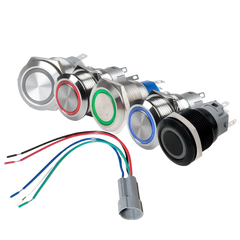
5-pin prewired socket for 19mm metal push button switch, showing colour-coded flying leads (white, red, black, blue, green) exiting the plug

Elevate Automotive

19mm Push Button Switch Socket — 5-Pin Prewired Harness

MPBS-Plug

A 5-pin prewired socket that plugs onto the back of a 19mm metal push button switch. Colour-coded flying leads for switch power, LED and both NO and NC contacts.

5-pin plug-fit
19mm 5-pin switch
5 wire · colour-coded

$6.00

4 interest-free payments of $1.50 with
or finance your build with
We accept
Universal fitment5-pin socket for 19mm metal push button switches

Shipping & collection

Worldwide shipping available*
In-store pickup
Professional installation available

*Shipping is calculated at checkout based on your location. Some products can't be delivered to every address.

A 5-pin prewired socket that plugs onto the back of a 19mm metal push button switch and runs the wiring out on colour-coded flying leads. Feeds power to the switch's LED and carries both the normally-open and normally-closed contacts on separate wires, so one switch can indicate its state and control the circuit without any crimping at the switch pins. Fits 4WD dash panels, canopy control boxes, caravan cabinets, marine helms and custom aux-power projects built around the 19mm push button switch range.

The socket clips onto the switch's 5-pin rear terminal in one push. Five colour-coded wires exit the connector: white for switch power, red for LED positive, black for LED negative, blue for the normally-closed contact, green for the normally-open contact. The plug seats firm, pulls off cleanly for service work, and lines up with the standard 5-pin wiring diagrams for this switch class.

This is the connector only. It needs a matched 19mm 5-pin metal push button switch to work, and the switch has to be the 5-pin type (not a 2-pin, 3-pin or 4-pin variant). Fuse the power feed at the source rather than at the switch, and size the fuse to the load the switch drives. The switch itself carries signal-level current, so any high-current load (a winch, a big inverter, a heavy driving-light bar) needs a relay between the switch and the load.

Pairs with
  • 5-pin socket — plugs onto the switch rear
  • Colour-coded wires — matches standard 5-pin diagrams
  • Prewired flying leads — no crimping at the switch
  • Push-fit plug — clips on, pulls off for service
  • NO and NC ready — wire either contact mode
  • Suits 19mm range — matches Elevate switch range

Connector

Type: 5-pin plug

Fits switches: 19mm 5-pin

Cores: 5, colour-coded

Electrical

Voltage: 12V DC

Function: Signal / trigger

5-pin socket for 19mm metal push button switches
12V DC accessory circuits
Not rated for 240V AC mains
Not for high-current loads (winch, large inverter) — trigger a relay instead

Q: What's the difference between a 5-pin and a 2-pin push button switch?
A 2-pin switch only handles the switching contacts. A 5-pin adds power and ground for the built-in LED plus separate normally-open and normally-closed circuits, so one switch can indicate its state and control the circuit at the same time. The 19mm metal push button range this socket fits uses the 5-pin layout.

Q: What does normally open and normally closed actually mean?
A normally-open contact carries no current until the switch is pressed, then closes and lets current flow. Normally-closed does the opposite: it carries current until the switch is pressed, then breaks the circuit. Most auxiliary switching uses normally-open. The socket wires both, so either mode is ready to hook up.

Q: Which wire goes where?
White to switch power, red to LED positive, black to LED negative or earth, blue to the normally-closed circuit, green to the normally-open circuit. The colour code matches the standard 19mm 5-pin metal push button layout, so it lines up with the generic wiring diagrams for this switch class.

Q: Do I need this socket if I can solder straight to the switch pins?
You can solder directly to the pins, but the socket lets you swap or replace the switch without cutting or unsoldering the loom. On a dash-mounted setup where the switch is likely to come out again for other work, the socket saves an hour of rework each time.

Q: How do I fuse the circuit?
Fuse the power feed at the source (the battery, isolator or fuse block), not at the switch. Size the fuse to the load the switch drives, not to the switch itself. On most auxiliary setups the switch carries signal-level current only and the load current runs through a separate relay, so the switch does not need to be sized to the load.

Q: Will this fit any 19mm push button switch?
It fits 19mm metal push button switches built to the 5-pin rear terminal pattern the Series of Metal Push Button Switches range uses. Switches with 2, 3 or 4 pins will not line up, and 22mm anti-vandal switches use a different socket entirely.

Q: What does the LED do?
The LED is the illuminated ring around the button that shows the switch is powered up. The socket carries the LED's positive and negative on separate wires, so the LED can be wired to switched power (only lights when the accessory is on) or to a permanent 12V feed (an indicator light for finding the switch in the dark).

Q: What voltage is this rated for?
The socket carries whatever the wires and switch are rated for. The 19mm metal push button switch it plugs into is a 12V DC accessory-circuit component. Do not run 240V mains through it, as the switch and socket are not rated or certified for mains voltage.

Q: Will this handle the current for a winch or a big inverter?
No. The switch and socket are rated for accessory-level signal current, not the 200 to 500A a winch draws or the 200A a 2000W inverter pulls. Wire the load through a relay or contactor and use this switch to trigger the relay's coil instead of carrying the load itself.

Join our community.