EA-Logo-RGB-Master_Yellow-Dark-Grey-Black


Currency

Cart 0

SIGN UP FOR $10 OFF YOUR FIRST ORDER

Sorry, looks like we don't have enough of this product.

Pair with
Estimate shipping
Add order notes
Is this a gift?
Subtotal Free
View cart
Shipping, taxes, and discount codes are calculated at checkout

Your Cart is Empty

Home / Lighting / Driving & light bars
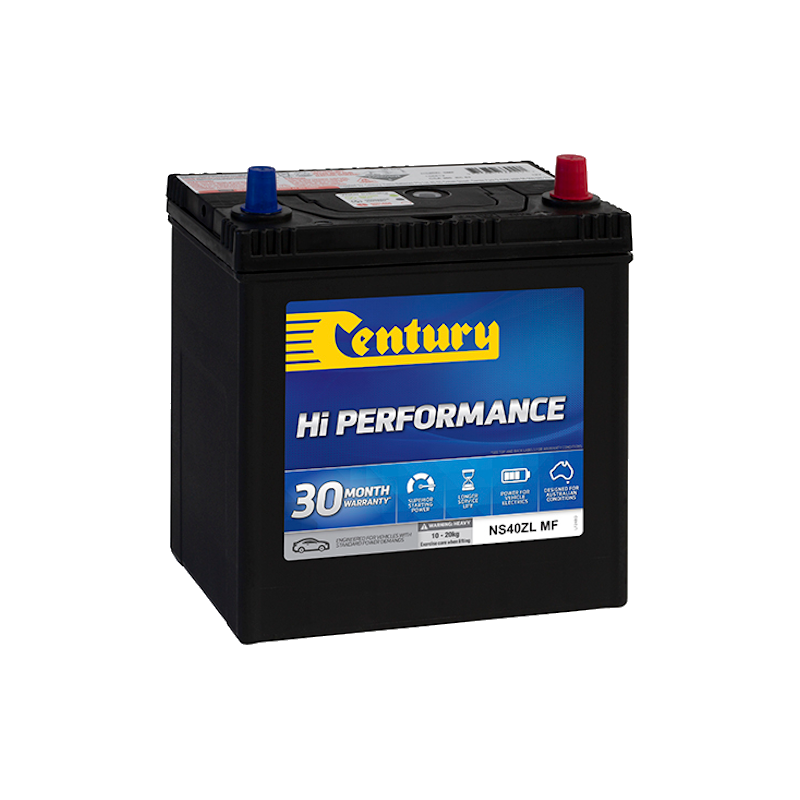

Century NS40ZL MF 12V Hi Performance starter battery, positive terminal forward-left C polarity, SP small-post tapered terminals, NS40Z footprint, red and black casing with carry handlesPolarity diagram of a six-cell 12 volt battery seen from above, positive terminal at the left and negative at the right, labelled 12 Volt C Polarity – Century batteryLine drawing of a standard tapered lead battery post, labelled Standard Terminal Post (STD) – Century batteryCentury NS40ZL MF 12V Hi Performance starter battery, side view showing NS40Z case profile

Century

NS40ZL MF Hi Performance Battery — 12V 360CCA 38Ah

105155

Century NS40ZL MF Hi Performance 12V starter battery. 360 CCA, 63 min reserve, 38 Ah, calcium wet-cell on NS40Z footprint, C polarity (positive forward-left), SP small-post tapered terminals. Fits earlier Toyota Hilux and Hiace petrol, Mazda B-Series, Ford Courier, Nissan Navara petrol with SP post factory fit. 30-month warranty.

$165.00

4 interest-free payments of $41.25 with
or finance your build with
We accept
Fitment: Japanese petrol imports with NS40Z tray (195 x 127 x 200 mm), C polarity (positive forward-left), and SP small-post terminals. ✓ Earlier Toyota Hilux petrol (NS40Z-tray, SP post models); ✓ Earlier Toyota Hiace petrol (NS40Z-tray, SP post models); ✓ Mazda B-Series petrol (NS40Z-tray, SP post models); ✓ Ford Courier petrol (NS40Z-tray, SP post models); ✓ Earlier Nissan Navara petrol (NS40Z-tray, SP post models); ✗ Vehicles with STD standard-post factory terminals — use NS40ZLS MF instead; ✗ D polarity vehicles — use NS40Z MF instead; ✗ EFB or AGM-rated stop-start vehicles — use matching EFB or AGM battery; ✗ Deep-cycle, auxiliary, or house battery role — use deep-cycle AGM or lithium

Shipping & collection

Worldwide shipping available*
In-store pickup
Professional installation available

*Shipping is calculated at checkout based on your location. Some products can't be delivered to every address.

A 12V NS40Z-footprint starter battery with small-post (SP) terminals and C polarity for Japanese petrol imports. Puts 360 cold-cranking amps and 63 minutes of reserve into a 195 by 127 by 200 mm case with cables that clamp onto the smaller SP taper. Fits earlier Toyota Hilux and Hiace petrol, Mazda B-Series petrol, Ford Courier petrol and earlier Nissan Navara petrol where the vehicle came factory with the small SP terminal post.

Calcium wet-cell plates sit on a Platelock plate pack with a mud rack catching plate sediment, double-insulated separators keep the cells apart, and a flame-arrested lid blocks spark ignition of the hydrogen vent. The case is sealed maintenance-free with moulded carry handles and a state-of-charge indicator in the lid. Posts are small-taper SP style, positive forward-left for C polarity.

This is a flooded wet-cell starter, not an AGM, EFB or deep-cycle battery. Charge it on a flooded profile (14.4 to 14.7 V bulk, 13.5 to 13.8 V float at 20°C) and fuse the auxiliary circuit at the starter end, not at the battery.

What sets it apart

AU-made for AU heat — built at Century's Carole Park plant.

Platelock plate pack — resists vibration on corrugated roads.

Mud rack base — catches plate sediment, prevents cell shorts.

Flame-arrested lid — blocks hydrogen vent ignition.

Calcium wet-cell — lower water loss, longer service life.

30 months Hi Performance tier — Century starter cover.

Drop-in NS40Z footprint — matches factory tray and hold-down.

Step up to Ultra Hi Performance — 15% more cranking and 40 months with the Ultra variant below.

Charging, mounting and fusing

Charge on a flooded wet-cell profile: 14.4 to 14.7 V bulk and 13.5 to 13.8 V float at 20°C, with temperature compensation of -18 mV per °C above or below. The battery sits on the vehicle's existing NS40Z-tray mud-rack base saddle. Torque the SP terminals to 5 to 8 Nm with the hook-down bracket snug but not crushing the lid. A dab of petroleum jelly on the clamp heads after cranking slows corrosion.

Fuse the auxiliary circuit at the starter end with a MIDI or MEGA holder sized to the cable, not at the battery post. For a 24V series pair, match two batteries within 10% of each other on age and state-of-charge or the newer one will carry the pack. European marques from 2008 on with a battery management module need a BMS reset with an OBD tool after any battery change so the alternator relearns the charge rate.

  • 360 CCA cranking — Hi Performance tier starting output
  • 63 min reserve — Keeps accessories alive if the alternator drops
  • Platelock plate pack — Resists vibration on corrugated roads
  • Calcium wet-cell — Lower water loss, longer service life
  • Mud rack base — Catches plate sediment, prevents shorts
  • Flame-arrested lid — Blocks spark ignition of hydrogen vent
  • SP small-post terminals — Matches factory SP cable clamps
  • 30-month warranty — Century Hi Performance tier cover

Electrical

Voltage: 12V DC

CCA: 360 A (SAE J537)

Reserve: 63 min at 25A

Capacity: 38 Ah at C20

Chemistry: Calcium wet-cell

Build

Terminal: SP tapered

Polarity: C (positive left)

Case: Flame-arrested MF
Length: 195mm

Width: 127mm

Height: 200mm

Total height over posts: 220mm

Weight: 9.9kg

Disconnect the vehicle at the negative terminal first, then at the positive. Lift the old battery out using the moulded carry handles on the top of the case. The NS40Z footprint drops straight into the factory tray on NS40Z-equipped vehicles with no tray modification needed. Check the tray base for corrosion and clean before fitting the new battery.

Set the battery in the tray with the positive post forward-left (C polarity). Fit the vehicle's existing hold-down bracket, which on NS40Z-tray vehicles is usually a top ridge clamp over the lid or a bottom J-hook. Torque the hold-down to the vehicle manufacturer's spec; typical range is 5 to 8 Nm for Toyota hook-down. Over-tightening cracks the lid, under-tightening lets the battery vibrate.

Wire-brush the SP small-post terminals and the matching cable clamps until bright. Reconnect positive first then negative, torqued to 5 to 8 Nm. A dab of petroleum jelly on the clamp heads slows corrosion. Fuse any auxiliary circuit at the starter end with a MIDI or MEGA holder sized to the cable, not at the battery post.

European marques from 2008 on with a battery management module need a BMS reset with an OBD tool after any battery change so the alternator relearns the charge rate. For long-term storage, charge on a flooded wet-cell profile: 14.4 to 14.7 V bulk and 13.5 to 13.8 V float at 20°C with temperature compensation of -18 mV per °C.

Fitment: Japanese petrol imports with NS40Z tray (195 x 127 x 200 mm), C polarity (positive forward-left), and SP small-post terminals. ✓ Earlier Toyota Hilux petrol (NS40Z-tray, SP post models); ✓ Earlier Toyota Hiace petrol (NS40Z-tray, SP post models); ✓ Mazda B-Series petrol (NS40Z-tray, SP post models); ✓ Ford Courier petrol (NS40Z-tray, SP post models); ✓ Earlier Nissan Navara petrol (NS40Z-tray, SP post models); ✗ Vehicles with STD standard-post factory terminals — use NS40ZLS MF instead; ✗ D polarity vehicles — use NS40Z MF instead; ✗ EFB or AGM-rated stop-start vehicles — use matching EFB or AGM battery; ✗ Deep-cycle, auxiliary, or house battery role — use deep-cycle AGM or lithium

Q: What does NS40ZL MF mean?
NS40Z is the Japanese battery tray size (195 by 127 by 200 mm). The L is the polarity code; L means the positive terminal is on the left when the battery is sitting label-up with the posts facing you (what Century calls C polarity). MF stands for maintenance-free, meaning the cells are sealed and never need topping up with distilled water.

Q: What is the difference between NS40ZL MF and NS40ZLS MF?
Identical case, polarity, chemistry, and electrical spec (both are 360 CCA, 63 min RC, 38 Ah, 9.9 kg, 30-month Hi Performance tier). The only difference is terminal post style: NS40ZL MF uses SP small-post tapered terminals, NS40ZLS MF uses STD standard-post tapered terminals. Check your existing battery's post diameter or your vehicle's cable clamps; buy the one that matches.

Q: What is the difference between NS40ZL MF and NS40ZLX MF?
Same tray, same polarity, same SP terminals. NS40ZLX MF is the Ultra Hi Performance tier step-up: 400 CCA instead of 360 (about 11% more cranking), 70 min RC instead of 63, 42 Ah instead of 38, 40-month warranty instead of 30. Pay about 25% more for the Ultra tier if you want longer life or more cranking margin.

Q: What does CCA actually mean?
Cold Cranking Amps is the current the battery can deliver for 30 seconds at -18°C without the voltage dropping below 7.2 V, measured to SAE J537. In plain terms: it is the number for turning the engine over on a cold start. 360 CCA is the Hi Performance tier output for an NS40Z-size battery and more than enough to crank a 1.5 to 2.5 L Japanese petrol engine in any Australian climate.

Q: What does Reserve Capacity mean and does 63 minutes matter?
Reserve Capacity is the minutes a fully charged battery can run a 25 A load at 25°C before the voltage drops below 10.5 V. In the real world: your alternator fails on a trip, headlights and the ECU keep drawing current, and 63 min is roughly how long you have before the engine stalls out. More RC equals more reserve time; 63 min is the Hi Performance tier figure for NS40Z size.

Q: Will this fit my vehicle?
Check three things: tray size (NS40Z is 195 by 127 by 200 mm), terminal style (SP small-post tapered; if your clamps don't fit, you need NS40ZLS MF with STD posts instead), and polarity (C means positive forward-left; if yours is forward-right, you need NS40Z MF for D polarity). NS40Z-tray vehicles include earlier Toyota Hilux and Hiace petrol, Mazda B-Series, Ford Courier and earlier Nissan Navara petrol — but always confirm against your current battery or the OEM spec.

Q: What is the difference between SP and STD terminals?
SP small-post tapered terminals are physically smaller in diameter than STD standard tapered posts. A clamp made for STD will not grip an SP post tightly; a clamp made for SP will slip over an STD post without biting. Your vehicle's cable clamps determine which you need. If you have the old battery, measure the post diameter at the top; SP posts measure around 11 mm positive and 13 mm negative at the top taper, STD measure around 17.5 mm and 15.9 mm.

Q: Can I use this as a deep-cycle or house battery?
No. This is a flooded calcium wet-cell starter battery designed for the short, high-current bursts needed to crank an engine. Repeated deep discharge (below 50% state of charge) will sulfate the plates and shorten service life dramatically. For an auxiliary or house role in a caravan or 4WD, use a deep-cycle AGM or lithium battery paired with a DC-DC charger.

Q: Can I use this in a stop-start vehicle?
Only if the vehicle's OEM spec calls for a conventional MF starter. If the OEM calls for an EFB (Enhanced Flooded Battery) or AGM (Absorbent Glass Mat), you must use the matching chemistry; fitting a standard MF where EFB or AGM is required will fail prematurely because the plates are not built for the deep partial-state-of-charge cycling that stop-start demands.

Q: How long should this battery last?
Typical service life in Australian conditions is 3 to 5 years, with the warranty covering 30 months against manufacturing defects. Heat is the biggest killer: a battery under the bonnet of a Perth-based ute in summer may age twice as fast as one in a garage-kept vehicle in Hobart. Keep the terminals clean, keep the alternator charging properly, and avoid repeated deep discharge to get the longer end of the range.

Join our community.