EA-Logo-RGB-Master_Yellow-Dark-Grey-Black


Currency

Cart 0

SIGN UP FOR $10 OFF YOUR FIRST ORDER

Sorry, looks like we don't have enough of this product.

Pair with
Estimate shipping
Add order notes
Is this a gift?
Subtotal Free
View cart
Shipping, taxes, and discount codes are calculated at checkout

Your Cart is Empty

Home / Lighting / Driving & light bars

Sealed 12V mini relay in ISO 280 4-pin footprint, black weatherproof body with 6.3mm blade terminals on the bottom face, resistor-protected coil for ECU and canbus trigger circuits

Elevate Automotive

Mini Relay 12V 40A 4 Pin — Normally Open Sealed with Resistor

ACX1939RBL

Sealed 12V 40A mini relay in the ISO 280 4-pin footprint. Switches a 40A normally-open load off a small low-current trigger. Resistor across the coil for ECU, canbus and LED-flasher driver circuits.

40A · 12V DC
4-Pin ISO 280
Sealed body

$14.00

4 interest-free payments of $3.50 with
or finance your build with
We accept
Universal fitment12V mini relay in the ISO 280 4-pin footprint

Shipping & collection

Worldwide shipping available*
In-store pickup
Professional installation available

*Shipping is calculated at checkout based on your location. Some products can't be delivered to every address.

A sealed 12V mini relay that switches high-current loads on a small low-current trigger, like a horn, a driving-light bar, an air compressor, a fuel pump, a reversing camera feed or an aftermarket starter solenoid. Drops into any standard mini-relay socket on the 4-pin ISO 280 footprint. Fits 4WDs, utes, caravans, trailers, boats and service vehicles anywhere a switched auxiliary circuit runs off a low-current signal.

Housed in a weatherproof black plastic body with 6.3mm blade terminals on the bottom face. Carries a back-EMF resistor across the coil so the trigger side stays clean when the relay drops out. Contact rating is 40A continuous on the normally-open leg. Pin numbering follows the ISO 280 standard, 30 for the common, 85 and 86 for the coil, 87 for the normally-open output.

The 40A rating is the continuous switching ceiling. A winch, a large inverter feed or anything drawing above 40A continuous needs a heavier relay or a contactor. Fuse the switched circuit at the source, not at the relay itself. If the trigger comes from an ECU, body-control module, canbus signal or LED flasher, the resistor on the coil kills the back-EMF spike that would otherwise feed back into the driver and damage it.

Pairs with
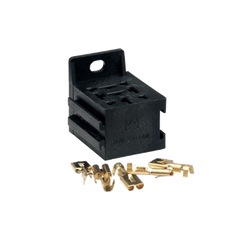
Need something heavier
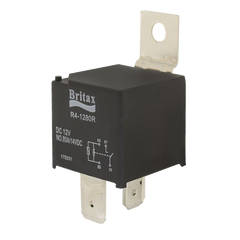
  • Compact 4-pin — drops into any standard mini-relay socket
  • 40A rating — continuous switching for lights, horns, pumps and fans
  • Sealed body — weatherproof housing for engine-bay and exposed mounts
  • Resistor coil — kills back-EMF into ECU, canbus and LED-flasher drivers
  • Silver contacts — pit-resistant across repeated switching cycles
  • ISO 280 pins — standard pin layout for any 4-pin mini socket
  • 6.3mm blades — fits standard female spade terminals on the trigger and load legs

Electrical

Voltage: 12V DC
Current: 40A continuous
Contact: Normally Open (SPST)
Coil current: ~160mA
Coil resistance: ~75Ω
Suppression: Resistor across coil
Contacts: Silver

Physical

Form: ISO 280 mini
Pins: 4-pin
Terminals: 6.3mm blade
Body: Sealed plastic
Pin layout: 30 common, 85/86 coil, 87 N/O

12V mini relay in the ISO 280 4-pin footprint
12V negative-earth systems (4WDs, utes, caravans, trailers, boats, service vehicles)
24V systems — coil will burn out; use a 24V-coil equivalent
Loads above 40A continuous — use a heavier relay or a contactor
Direct submersion or continuous water soaking
Positive-earth vehicle systems

Q: What is a 4-pin normally-open mini relay?
A 4-pin mini relay is a tiny electromagnetic switch in the ISO 280 standard footprint. Normally open means the switched contact is open until the coil is energised, so no current flows to the load until the trigger wire goes live. When the trigger drops, the relay drops out and the load is cut.

Q: What loads is a 40A relay actually good for?
Anything that draws up to about 30A continuous with a little headroom. Driving lights (typical bar draws 10 to 20A), horns (10 to 20A), fuel pumps (5 to 15A), auxiliary fans (10 to 30A), compressors in short-cycle use, and reversing camera feeds. Not for winches (200 to 500A under load), big inverters above 1000W (80A plus), or alternator-to-house-battery main feeds (100 to 250A).

Q: What do the pin numbers mean?
The ISO 280 standard numbers the pins so any mini socket works. Pin 30 is the common input (unswitched positive from the fuse). Pin 85 and pin 86 are the two sides of the coil (one goes to the trigger, the other to ground). Pin 87 is the normally-open output that feeds the load when the coil is energised.

Q: Why does it have a resistor across the coil?
When the coil is switched off, the collapsing magnetic field spikes a reverse voltage back out of the coil. That spike can damage ECUs, body-control modules, canbus wiring and LED flashers that are driving the coil. The resistor across the coil absorbs the spike and keeps the trigger side clean. A diode-protected variant does the same job but is polarity-sensitive; a resistor works either way around.

Q: Will it work on 24V?
No. The coil is wound for 12V. Running it on 24V doubles the current, burns the coil out in minutes and leaves the relay stuck open. For a 24V truck or marine system, pick a 24V-coil relay with the same current rating.

Q: What size fuse should the switched circuit use?
Size the fuse to the load, not the relay. A 40A relay on a 15A light bar still fuses at 15A at the battery end, because the fuse is protecting the wire and the load, not the relay. The relay only needs to carry the current the fuse allows.

Q: Does it need a special socket?
Any 4-pin or 5-pin mini-relay socket on the ISO 280 standard. The relay uses pins 30, 85, 86 and 87, which are present on both 4-pin and 5-pin sockets, so a 5-pin socket works too (pin 87a just stays unused).

Q: What size trigger wire does it need?
The coil draws about 160mA at 12V. A thin wire does the job, 0.5mm² or 1mm² is comfortable. The heavy wire goes on the load side (pin 30 in, pin 87 out), sized for the load current and length of the run.

Q: Is it waterproof?
The body is a sealed plastic housing that handles splash, road grime, dust and underbonnet moisture. Treat it as splash-tolerant rather than submersible. Mount it with the terminals facing down so any water that gets near the socket runs off rather than pooling at the pins.

Q: Can it switch LED driving lights safely?
Yes. The 40A contact rating covers any single-row or dual-row LED bar on the market (even a 50-inch bar draws about 20A). The resistor on the coil also protects the vehicle's canbus wiring if the trigger is tapped off an existing circuit instead of a switch.

Q: Normally-open vs changeover, which should I pick?
Normally open (this relay) switches one circuit on when the trigger is live. Changeover (5-pin) switches between two circuits, so one load drops as the other picks up. If the job is just "turn this load on when the trigger is active", normally open is the right choice. If the job needs two circuits that alternate (headlights to driving lights, interior fan speed low to high), use a 5-pin changeover instead.

Q: How long should it last?
Automotive mini relays with silver contacts are typically rated for hundreds of thousands of switching cycles when run inside their contact rating. Keep the load under 40A, use the resistor to kill coil spikes, and the relay outlasts the rest of the harness.

Join our community.