EA-Logo-RGB-Master_Yellow-Dark-Grey-Black


Currency

Cart 0

SIGN UP FOR $10 OFF YOUR FIRST ORDER

Sorry, looks like we don't have enough of this product.

Pair with
Estimate shipping
Add order notes
Is this a gift?
Subtotal Free
View cart
Shipping, taxes, and discount codes are calculated at checkout

Your Cart is Empty

Home / Lighting / Driving & light bars
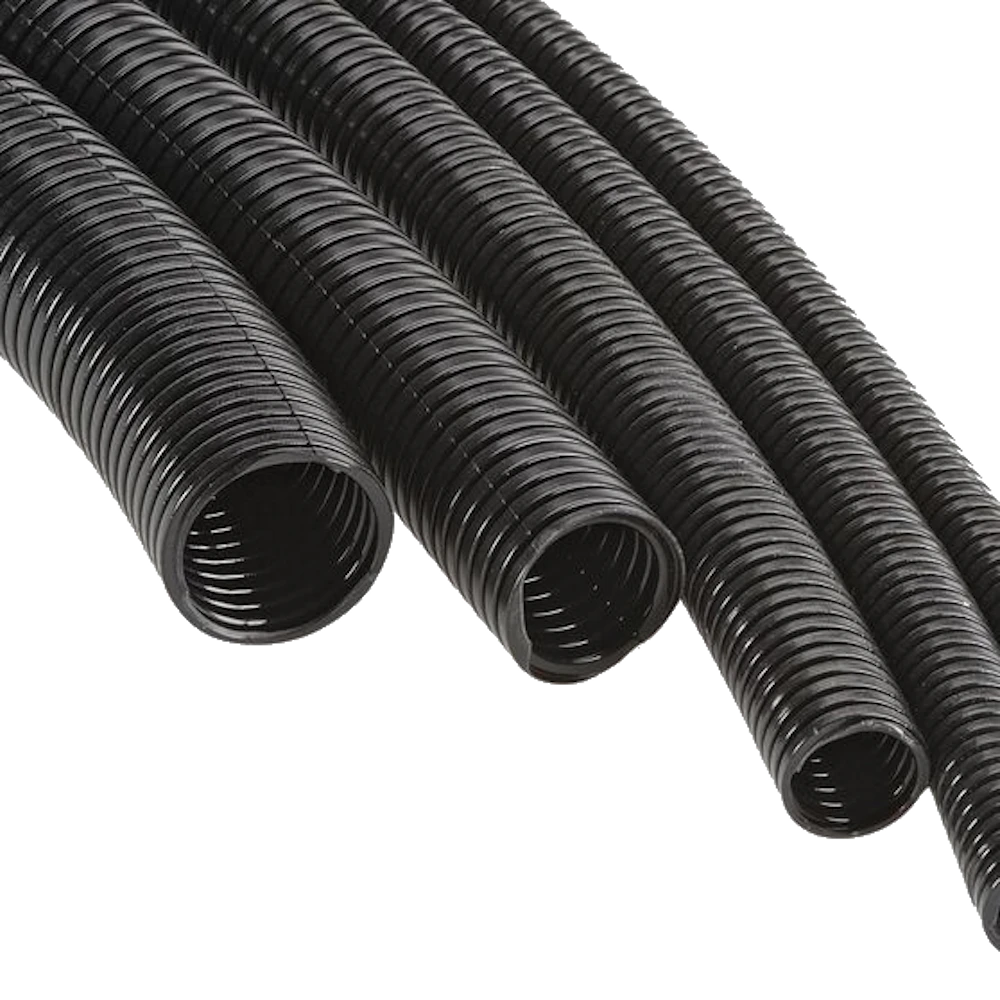
Black non-split PA6 nylon conduit, IP68 rated

Elevate Automotive

Conduit Black - Non-Split

EANC-8

Non-split PA6 nylon conduit rated IP68, -25°C to 80°C. Fully sealed cable protection for automotive, marine and industrial wiring. Sold per metre.

IP ratingIP68
Temp range-25°C to 80°C
MaterialPA6 nylon

$3.00

4 interest-free payments of $0.75 with
or finance your build with
Thickness
We accept
Universal fitmentFully sealed IP68 cable protection for automotive, marine, caravan and industrial wiring runs.

Shipping & collection

Worldwide shipping available*
In-store pickup
Professional installation available

*Shipping is calculated at checkout based on your location. Some products can't be delivered to every address.

A closed-wall corrugated conduit in PA6 nylon that seals a wiring run against water, dust, dirt and vibration. Fits engine-bay looms, chassis and underbody runs, caravan-to-tug leads and marine helm wiring where the harness gets exposed and needs to stay sealed for the life of the install.

The corrugated profile bends around chassis rails and through tight spaces without kinking, and the continuous wall carries an IP68 rating (dust-tight, sustained submersion capable). Resists engine oils, solvents and common workshop chemicals. Continuous operating range runs from -25°C to 80°C with short-term exposure up to 150°C, and the PA6 is self-extinguishing and halogen-free.

Cables feed through end to end before termination; there is no slit down the side to pop wires in mid-run later. For a loom that will need wires added or removed after install, use split loom tube.

Sold per metre.

Need mid-run access instead?

If you need to slot new wires into an existing loom without pulling everything apart, the split alternative is better. The slit down the side lets you push cables in mid-run:
  • IP68 sealed — non-split tube keeps water and dust out
  • PA6 nylon — durable, chemical and abrasion resistant
  • Wide temp range — -25°C to 80°C, engine-bay rated
  • Flame retardant — self-extinguishing, halogen-free

Material & rating

Material: Polyamide 6 (PA6) nylon

Ingress protection: IP68 (non-split)

Temperature range

Continuous: -25°C to 80°C

Short-term: Up to 150°C

Resistance

Chemical: Oils, solvents, chemicals

Flame: Self-extinguishing, halogen-free

Fully sealed IP68 cable protection for automotive, marine, caravan and industrial wiring runs.
Underbody, chassis, engine bay and exposed harness runs where water and dust sealing matters
Runs where the full loom is finalised before the conduit goes on
Looms you'll need to add or remove wires from later. Use split loom tube ([split-loom-tube]) instead.

Q: What's the difference between this and split loom tube?
Non-split conduit is a closed tube. Cables are fed through end to end, which keeps the full IP68 seal intact. Split loom tube has a slit along its length so you can pop cables in and out after the harness is built, but it isn't sealed against water and dust the same way. Use non-split conduit for exposed, wet or vibration-prone runs (chassis, underbody, engine bay); use [split-loom-tube] where you might need to add or remove wires later.

Q: Is it flexible?
Yes. Despite the closed wall, the corrugated profile lets it bend around chassis rails and through tight spaces without kinking.

Q: What temperature range does it handle?
Continuous use from -25°C to 80°C, with short-term exposure up to 150°C. Covers engine bay and underbody conditions.

Q: Is it sold per metre?
Yes. Order the length you need, no minimum and no fixed spool size.

Q: Which size do I need for my cable bundle?
Measure the diameter of the bundle you're feeding through. Add roughly 2-3mm clearance so the cables slide without binding, then round up to the next stocked size. 8mm suits a single Cat6 or two 6mm auto cables; 20mm covers a small trailer harness; 25mm handles a full main-feed loom. Erring on the loose side helps the cable slide through during install and leaves room to add one or two conductors later without pulling the whole run apart.

Q: Can I heat-shrink the ends to seal them?
Yes, and it's the recommended finish. Adhesive-lined dual-wall heat-shrink over the conduit end and onto the cable jacket completes the seal at the termination, which is where water usually gets in on a working install. Size the heat-shrink for a 3:1 ratio and start it 15-20mm past the conduit end so the shrunk section grips the jacket cleanly.

Q: Does the IP68 rating hold after cutting to length?
The conduit wall stays IP68 rated wherever it's continuous; the cut ends are the exposure point. Seal each end with adhesive-lined heat-shrink or a rubber grommet at the entry point and the full run stays sealed. A raw cut end left open in a wet location will let water track down the conduit and pool at the low point.

Q: Is PA6 the same as nylon? What about polypropylene?
PA6 is one specific type of nylon (polyamide 6). It sits above polypropylene on both temperature resistance and chemical resistance, which is why engine-bay and underbody conduit uses PA6 rather than polypropylene. Both flex, but polypropylene softens around 80°C while PA6 handles continuous 80°C with short bursts up to 150°C, so it survives the heat coming off a header or turbo where polypropylene would go soft.

Join our community.