EA-Logo-RGB-Master_Yellow-Dark-Grey-Black


Currency

Cart 0

SIGN UP FOR $10 OFF YOUR FIRST ORDER

Sorry, looks like we don't have enough of this product.

Pair with
Estimate shipping
Add order notes
Is this a gift?
Subtotal Free
View cart
Shipping, taxes, and discount codes are calculated at checkout

Your Cart is Empty

Home / Lighting / Driving & light bars
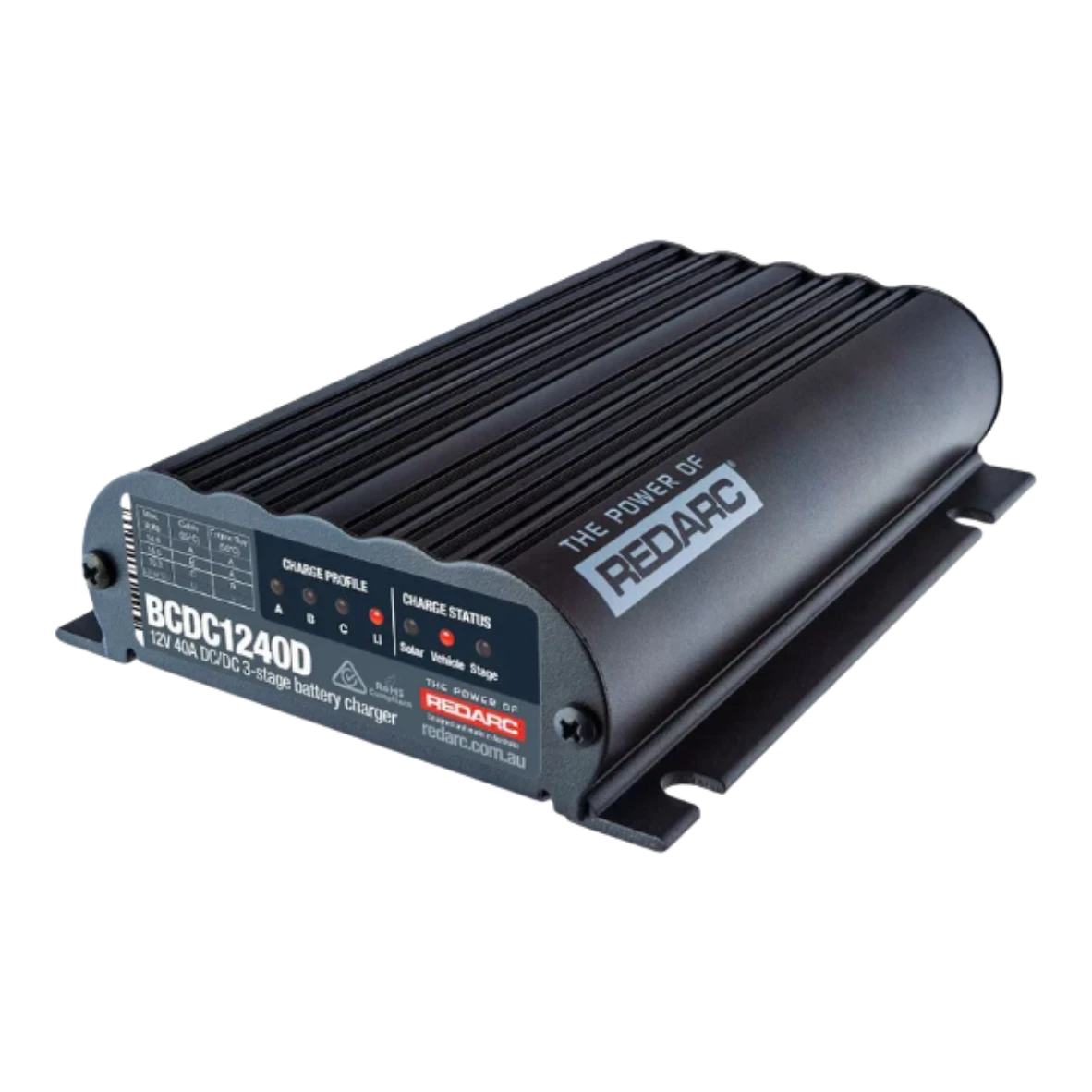
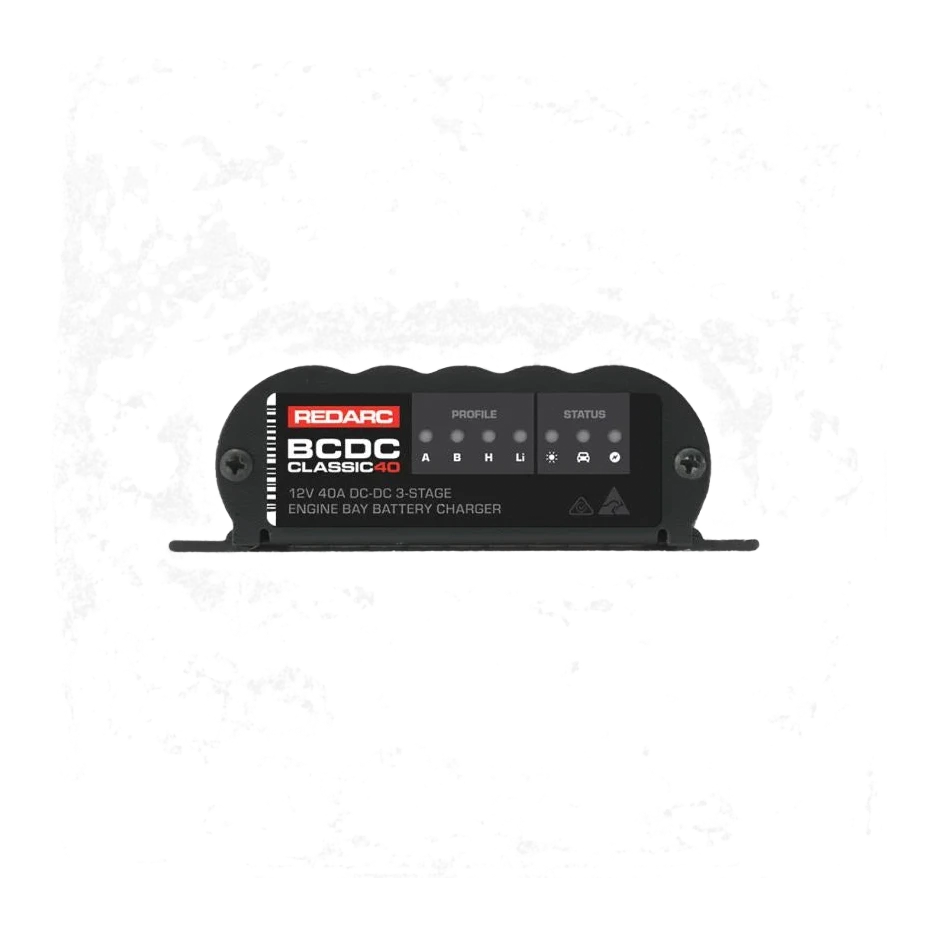
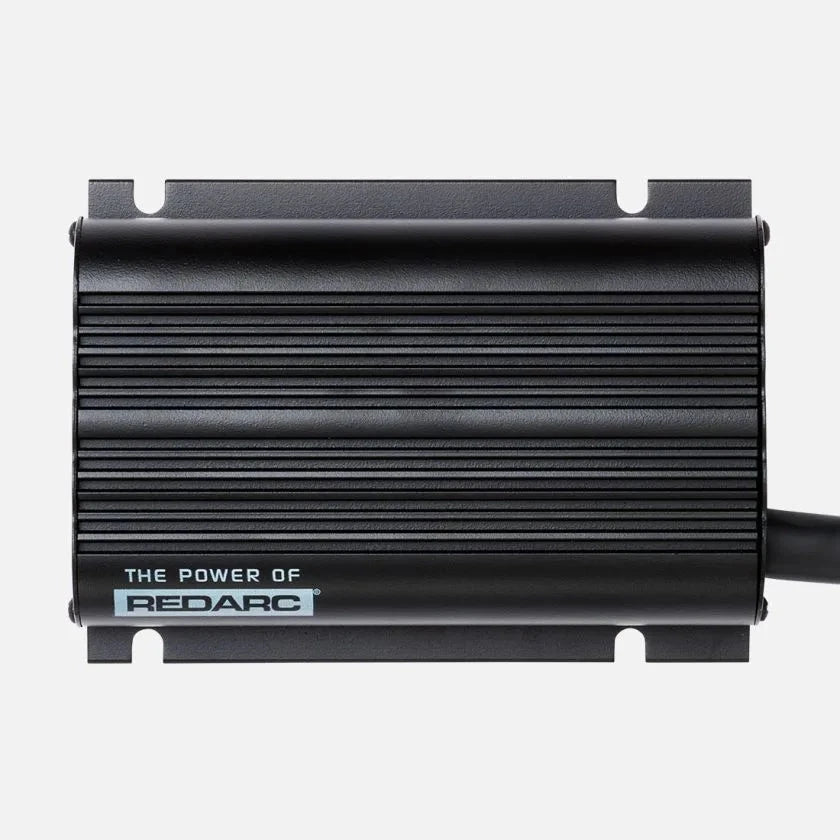
Redarc BCDC Classic40 40A DC-DC battery charger with built-in MPPT solar input, front view with Redarc brandingRedarc BCDC1240D terminal end panel showing bare-wire DC-DC input, solar input and 12V output connectionsRedarc BCDC1240D under-bonnet DC-DC charger isometric detail in grey enclosure with mounting flanges

Redarc

BCDC Classic40 — 40A DC-DC Charger + MPPT Solar

BCDC1240D

40A dual-input DC-DC charger with built-in MPPT solar controller. Charges a 12V auxiliary bank from the alternator and solar at once, with Green Power Priority running solar first to save fuel. Fully potted and under-bonnet rated. Five chemistry profiles. Built in Australia.

$649.00

4 interest-free payments of $162.25 with
or finance your build with
We accept
For 12V auxiliary battery banks fed from a 12V or 24V vehicle (DC-DC input accepts 9-32V, output is 12V).

Shipping & collection

Worldwide shipping available*
In-store pickup
Professional installation available

*Shipping is calculated at checkout based on your location. Some products can't be delivered to every address.

40A DC-DC + MPPT SOLAR

Dual input — alternator and MPPT solar controller in one in-cabin unit.

GREEN POWER PRIORITY

Solar takes precedence over the alternator when the panels are producing — saves fuel.

LITHIUM AND AGM READY

Five charge profiles cover standard lead-acid, calcium, gel, AGM and LiFePO4 lithium.

HARDWIRED IGNITION TRIGGER

Our workshop hardwires an ignition trigger on smart-alternator vehicles and multi-charger setups so all chargers only run when the vehicle is running.

2 YEAR REDARC WARRANTY

Backed by 2 years direct from Redarc. Repair or replacement in accordance with Redarc's warranty policy.

A dual-input DC-DC battery charger that pushes 40A into a 12V auxiliary battery bank from the alternator, from solar, or from both at once. Green Power Priority runs solar first when both are connected, cutting alternator load. Fits caravans, camper trailers, 4WD canopies, tray-back utes and service-body builds where the house bank sits apart from the starter battery.

The housing is a fully potted, fanless, silent 165 x 120 x 37mm block that mounts under the bonnet, in the cabin, in a canopy or in a caravan bulkhead. Inputs are 9 to 32V DC on the vehicle side and 9 to 32V DC MPPT on the solar side, so a 12V or 24V vehicle feeds the DC-DC input and a 12V nominal panel feeds the solar input. Output is always 12V DC at up to 15.3V across five chemistry profiles (standard lead-acid, calcium, gel, AGM and LiFePO4) and terminals are bare-wire for ring-crimp.

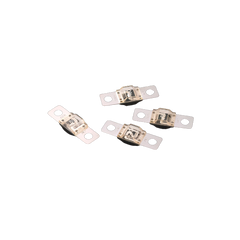
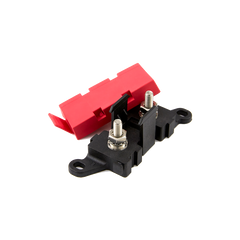
Output is 12V, not 24V, so a 24V house bank needs the Redarc BCDC2420 instead. Fuse both the input and the output at 60A within 150mm of the respective battery with Redarc FK60s or an equivalent MIDI holder, and hardwire the ignition trigger to the charger on any smart-alternator vehicle or multi-charger build so the chargers only run when the engine is running.

What sets it apart

Dual input — DC-DC and MPPT solar at once

Green Power Priority — solar runs first, saves fuel

Five chemistries — AGM, gel, calcium, lead-acid, LiFePO4

Under-bonnet rated — potted against heat and water

Fanless silent — no fan noise in the cabin

SoftStart — ramps up gently on engine start

Smart-alternator ready — ignition trigger input built in

Built in Australia — Lonsdale, SA

Pairs with
  • Dual input — DC-DC and MPPT solar at once
  • Green Power Priority — solar first, saves fuel
  • 40A continuous — pairs with 200Ah+ banks
  • Five chemistries — AGM, gel, calcium, lead-acid, LiFePO4
  • Under-bonnet rated — potted, heat and water sealed
  • Fanless — silent in the cabin
  • Smart-alternator ready — ignition trigger input built in
  • Built in Australia — Lonsdale, SA

Charging

Continuous output: 40A @ 12V DC

Max charging voltage: 15.3V

Output power: 600W

Charge profiles: 5

Charge stages: Multi-stage

Inputs

DC input range: 9-32V DC

Solar input range: 9-32V DC MPPT

Input fuse: 60A (FK60)

Output fuse: 60A (FK60)

Control and monitoring

Green Power Priority: Yes

Ignition trigger: Hardwired

Terminals: Bare wire

Protection and build

Standby current: <8mA

No-load current: <100mA

Operating temperature: -20°C to 80°C

Cooling: Fanless

Type approval: E-Mark
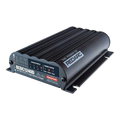
Length: 165mm

Width: 120mm

Height: 37mm

Weight: 1 kg

The Classic range is fully potted and under-bonnet rated for installation up to 80°C ambient. Mount it under the bonnet near the starter battery, in the cabin under a seat or in a service body, in a canopy, or in a caravan or camper trailer bulkhead. Use the four mounting flanges and bolt it to a flat surface so the housing can dissipate heat into the mount.

Fuse the DC-DC input with a 60A fuse within 150mm of the starter battery (Redarc FK60 or equivalent MIDI holder) and fuse the output with a 60A fuse within 150mm of the auxiliary battery. Cable size depends on run length: 6mm² tinned copper for runs under 3 metres, 10mm² for 3 to 6 metres, 16mm² for longer runs. Earth to the vehicle chassis is acceptable on the output negative in most installs but a direct return to the auxiliary battery negative is more reliable.

Hardwire the ignition trigger (blue wire) to a 12V switched source that only lives when the engine is running. This is mandatory on smart-alternator vehicles (anything with stop-start or variable-voltage charging) and on any build with more than one BCDC in the system, so all chargers stop when the engine stops and the aux battery never pulls the starter battery flat.

Select the chemistry profile at install with the internal configuration jumper or the external selector (consult the manual for your supply date). The default profile is standard lead-acid; AGM, gel, calcium and LiFePO4 profiles are selected before the first charge cycle. There is no custom profile on the Classic range.

For 12V auxiliary battery banks fed from a 12V or 24V vehicle (DC-DC input accepts 9-32V, output is 12V).
4WDs, utes, canopies, caravans, camper trailers, motorhomes, trays with a 12V house bank
Smart-alternator vehicles with ignition-trigger input hardwired at install
Builds pairing alternator and solar on the same bank
CRITICAL — not for 24V house banks (output is 12V); use the Redarc BCDC2420 instead
CRITICAL — not for starter batteries or 24V engine starting; this is an auxiliary charger only

Q: What is a DC-DC charger and why do I need one?
A DC-DC charger takes the raw voltage from your vehicle alternator and converts it to the exact voltage profile the auxiliary battery needs. Modern vehicles often put out as little as 12.5V while driving, which is too low to fully charge an AGM or lithium house bank. The DC-DC boosts and regulates that supply so the aux battery actually reaches 100%.

Q: What is MPPT solar and why does it matter?
MPPT stands for Maximum Power Point Tracking. It is the circuit that tells a solar panel to run at the voltage where it is producing the most power right now (the voltage shifts with temperature and shade). An MPPT controller pulls up to 30% more out of the same panel than a basic PWM controller does. The Classic40 has an MPPT controller built in on the solar input.

Q: What is Green Power Priority?
When the alternator and solar are both connected and the engine is running, the Classic40 pulls from the solar panel first and tops up the remainder from the alternator. Solar is free power once the panel is installed, so running it first reduces alternator load and saves fuel.

Q: What chemistries does it support?
Five charging profiles cover standard lead-acid, calcium, gel, AGM and LiFePO4 (lithium). The profile is selected at install. There is no custom profile on the Classic range; if you need a user-definable profile, look at the Redarc Manager30.

Q: Where can I mount it?
Under the bonnet (engine bay), in the cabin under a seat or in a service body, in a canopy, in a caravan bulkhead or in a camper trailer compartment. The Classic range is fully potted and rated for under-bonnet installation up to 80°C ambient. The BCDCN In-Cabin range is a separate line only rated for inside the vehicle.

Q: What size battery bank does the 40A suit?
Typically 200Ah to 400Ah for lead-acid and 100Ah+ for lithium. The usable rule of thumb is 10% to 20% of the bank's rated amp-hour capacity for charging current, so 40A pairs well with that range.

Q: Does it work with smart alternators and multi-charger setups?
Yes. Our workshop hardwires an ignition trigger to the charger on smart-alternator vehicles (anything with stop-start or variable-voltage charging) and on any build with more than one BCDC. The ignition trigger stops the chargers running when the engine is off, so a slow-charging aux battery never pulls the starter battery flat.

Q: What size solar panel can I connect?
The solar input accepts 9-32V DC. A single 12V nominal panel (open-circuit voltage usually 18-22V) is the right size. For a 40A charger we usually pair around 300W of solar in a caravan or canopy build. Avoid pairing a 24V nominal panel string on the solar input unless you confirm the open-circuit voltage stays under 32V in cold weather.

Q: Should I pick the Classic40 or the BCDCN1240 In-Cabin?
The Classic40 (BCDC1240D) is fully potted and under-bonnet rated for engine-bay installation. The In-Cabin range (BCDCN1240) is a lighter housing only rated for installation inside the vehicle (cabin, canopy or caravan bulkhead) at a lower maximum ambient temperature. If the charger will live in the engine bay, pick the Classic40; if it will live under a seat or in the caravan, either works and the BCDCN1240 is lighter on the budget.

Q: What fuses and cable do I need to install it?
60A input fuse within 150mm of the starter battery, 60A output fuse within 150mm of the auxiliary battery (Redarc FK60 or an equivalent MIDI holder is the standard choice). Cable size depends on the run length between batteries: 6mm² tinned copper for runs under 3 metres, 10mm² for 3 to 6 metres, 16mm² for longer runs. Our workshop sizes the fuse and cable to the full install on request.

Q: How long is the warranty?
Redarc 2 year warranty against manufacturing defects.

Join our community.