EA-Logo-RGB-Master_Yellow-Dark-Grey-Black


Currency

Cart 0

SIGN UP FOR $10 OFF YOUR FIRST ORDER

Sorry, looks like we don't have enough of this product.

Pair with
Estimate shipping
Add order notes
Is this a gift?
Subtotal Free
View cart
Shipping, taxes, and discount codes are calculated at checkout

Your Cart is Empty

Home / Lighting / Driving & light bars

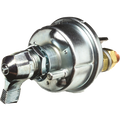
Battery master switch with chrome-plated lever and removable key, brass main terminals on the side, pin locator tab on the mounting flange

Elevate Automotive

Battery Master Switch — 125A or 300A with Removable Key

75910

Heavy-duty DPST battery isolator with removable key for lockout, 125A or 300A continuous at 6-36V DC. Includes a 20A field terminal pair for alternator excitation cut-off. Panels up to 6.5mm thick with anti-rotation pin locator.

Up to 300A continuous
6-36V DC, DPST
Removable key, lockable

$132.00

4 interest-free payments of $33.00 with
or finance your build with
Current
We accept
Universal fitmentA heavy-duty battery isolator with removable key for 4WDs, trucks, boats, caravans and mining vehicles

Shipping & collection

Worldwide shipping available*
In-store pickup
Professional installation available

*Shipping is calculated at checkout based on your location. Some products can't be delivered to every address.

A heavy-duty battery isolator that cuts both battery leads at the turn of a key, with a removable key so the circuit can be locked out while someone's working on it. Rated 125A or 300A continuous at 6 to 36V DC. Fits 4WDs, trucks, mining rigs, boats and caravans where a visible, lockable kill switch is needed on the main battery.

The body is diecast alloy with a chrome-plated lever and brass main terminals; the mounting stem carries twin O-ring seals for weather protection. A pin locator on the back of the flange stops the switch rotating in the panel. A separate 20A field terminal pair breaks the alternator excitation circuit at the same time, so the regulator sees the key position instead of a live battery. Panels up to 6.5mm thick.

Mount it close to the battery and run the shortest practical cable to the main stud. Voltage drop under cranking load matters more here than anywhere else in the circuit. Always fit a correctly-rated main fuse at the battery end as well. This is an isolator, not a short-circuit protection device.

Pairs with
  • Removable key — pulls out in the off position
  • DPST isolation — breaks both battery leads at once
  • 125A or 300A — pick the rating for your load
  • Field terminal — cuts the alternator excitation too
  • O-ring sealed — weatherproof mounting stem
  • Pin locator — anti-rotation tab stops panel twist

Electrical

Continuous: 125A or 300A

Peak: 1000/2500A (15s)

Voltage: 6-36V DC

Field: 20A continuous

Construction

Type: DPST

Case: Diecast alloy

Lever: Chrome-plated

Terminals: M10 brass studs

Seal: Twin O-ring

Mounting

Panel: Up to 6.5mm

Stem: ~12mm diameter

Lock: Removable key

Anti-rotation: Pin locator
A heavy-duty battery isolator with removable key for 4WDs, trucks, boats, caravans and mining vehicles
Suits 6V, 12V, 24V and 36V DC systems
Not for 240V AC mains. DC isolator only; mains isolation needs a different device.

Q: What does 'DPST' actually mean on a battery switch?
Double-pole single-throw. The switch has two separate circuits inside, both opened or closed by the same lever, so when you turn it off both the battery positive path AND the alternator excitation path get broken, not just one. On this unit, DPST is why you can wire the main battery feed through the big brass studs AND a separate alternator exciter wire through the small field terminals, and have both die together when the key turns.

Q: Which should I pick, 125A or 300A?
Match it to the continuous current the main battery circuit carries. The 125A variant covers typical 4WD, caravan, light-truck or marine starter and auxiliary runs where the biggest sustained draw is modest and only brief surges hit above 125A. The 300A variant is for heavy-duty service: big diesel engines, dual-battery banks, mine-spec vehicles, winch feeds carrying serious continuous load. If a winch circuit is involved, go 300A.

Q: What's the 'pin locator' for?
It's a small protruding pin on the back of the mounting flange. When you drill the panel for the main stem, you also drill a smaller hole next to it for this pin. The pin stops the switch body rotating when someone leans on the key. Without it the switch just spins on its mounting nut over time.

Q: Does the removable key mean I can lock it out for safety?
Yes. Pull the key out in the OFF position and the switch cannot be turned back on without it. This is a common requirement on mine sites and heavy-vehicle fleets for lockout-tagout (LOTO) procedures when working near the battery. In a workshop context, use it before you disconnect leads so there's zero chance of a dropped spanner going live.

Q: What is the 'field terminal' and do I need to use it?
A small secondary pair of terminals (rated 20A continuous) wired to a separate internal contact. Normally used to break the alternator excitation wire, the thin wire that tells the alternator to charge, at the same time the main switch opens. Without it, some externally-regulated alternators keep producing voltage after the main battery is isolated, which can damage the diodes. If the alternator is externally excited, wire the exciter through this field terminal. Modern internally-regulated alternators usually don't need it.

Q: Will this handle a winch?
The 300A variant can, for the duration winches typically run (seconds to a couple of minutes). The 125A variant will not. A 4WD winch pulls 200-500A under load and will fry the 125A contacts fast. Match the switch rating to the heaviest sustained load it will carry.

Q: Is this waterproof?
The mounting stem is sealed with twin O-rings so water can't track past the panel. The key end has basic weather resistance; the removable key seats into a protected recess but the body is not submersible. Mount it somewhere that stays dry under normal conditions, not in the direct path of a wheel-well spray.

Q: What size wire do I run to the main terminals?
Match the wire to the switch's continuous rating, not just the engine load. For the 125A variant, 25mm² (3 B&S) copper is a sensible minimum. For the 300A variant, 50mm² (0 B&S) is the smallest sane size, and 70mm² (00 B&S) if the run is long. The main terminal studs accept M10 or 3/8" ring lugs.

Q: Can I use this on a 24V system?
Yes. Rated 6 to 36V DC continuous. Covers 12V, 24V and 36V systems, which includes most heavy trucks, mining equipment and 24V marine installs. Not for 48V systems or 240V AC mains.

Q: Can Elevate's workshop install it?
Yes. We're a Perth 4WD and automotive electrical workshop and fit battery isolators regularly as part of dual-battery, winch and solar-charging installs. Book an install through the website.

Join our community.